 tvowmedia
Why I founded the CVA (Chinese Expression Alliance): From providing a home to building a platform for Chinese culture.
A comprehensive plan and explanation of the original intention that belongs to me and all participants.
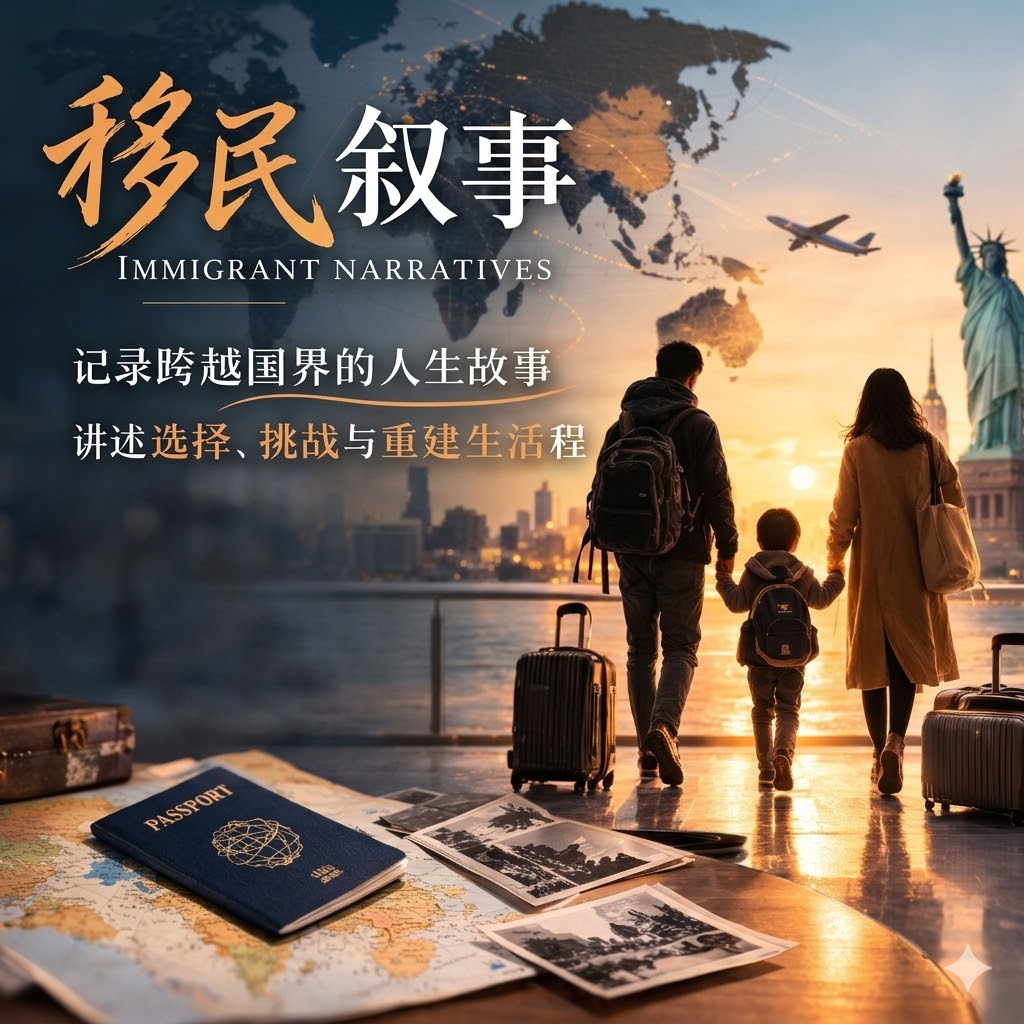
My first year in Pittsburgh felt like I was a child again.
I couldn't speak the language and could barely understand English; I had to raise two children and start a family from scratch; even going to the supermarket was nerve-wracking; taking the children to the doctor and enrolling them in school required repeated research and inquiries. That year, I devoted all my energy to the most basic things: "surviving," "settling down," and "helping the children adapt."
But it was during these hectic days that I gradually realized that I came to America not just to "survive," but to "live a more meaningful life."
The second year: I suddenly realized – “We need a platform that can truly speak up for Chinese people.” After the silence and adaptation of the first year, I became more and more clear about one thing: Chinese people in the United States lack channels to express themselves proactively. We have culture, stories, abilities, and ideas, but we do not have a space to be listened to, understood, or seen.
In the early days of my immigration journey, I started writing my own account on Xiaohongshu, simply for the sake of recording things. I never expected to receive so many messages from fellow Chinese people: "You've captured the feelings of each of us." "Thank you for speaking out what we've always been afraid to say." "Could you create a platform where we can also be seen?"“
In those most ordinary comments, I felt an increasingly clear sense of mission—Chinese people need their own space for expression.
I have to do something.
Until June 2025, I met Zhang Hong. Getting to know Ms. Zhang Hong was an extremely important and even fateful turning point in my life. She was once the top scorer in the college entrance examination and a female scientist with a science and engineering background who rose from poverty step by step. After retiring, she chose to rekindle her inner passion and pursued a master's degree in humanities. Now, she is dedicating herself to the community with unwavering passion, serving as a member of the Pennsylvania Asian Pacific American Advisory Committee, shining brightly in public affairs and philanthropy.
Each of these titles, taken individually, is a respectable achievement; but what truly makes her precious is her magnanimity, wisdom, drive, and her selfless dedication to the Chinese community. Meeting her in a foreign land and becoming her partner is one of the most fortunate connections of my life.
It was only then that I truly realized—someone had been quietly persisting in doing the same thing for three years. Zhang Hong is the founder of the "USTC Women's League," a community organization rooted in women, culture, and expression, which has been running for three years. And this organization is the predecessor of our registered non-profit organization CVA (Chinese Voices Alliance) today.
During that time, I was already developing the initial concept of a "Chinese Expression Platform"; while Zhang Hong was continuously advocating for women's expression. Two different names, but pointing to the same essence—to make everyone's voice heard. So we decided to merge our forces: to upgrade the "USTC Women's Alliance" to the "CVA Chinese Expression Alliance," completely merging the foundation of women's expression with the mission of Chinese expression.
This isn't about one person leading the other, but rather about "meeting the right person at the right time" to work together on a bigger, more sustainable, and more valuable endeavor.
We plan to build four platforms over the next two years—not because we are so powerful, but because more and more people are willing to join us. Our vision is clear: to complete an ecosystem for the expression of Chinese culture within two years.
• TVOW World Voice Publishing: Publishing true and powerful stories; making Chinese voices a source of sound in the publishing world.
• World Voice magazine: Recording cross-cultural life, people, eras, and identities, constructing a global narrative from a Chinese perspective.
• Official website platform tvowmedia.com: Building an open content library, creation platform and work display space.
• Pittsburgh Chinese Cultural City: Bringing culture from online to offline, and expression from words to real-world spaces.
These four platforms are not "already completed," but rather a two-year plan that we are gradually turning from blueprint to reality.
During this process, I received many helping hands, especially from Xiaohongshu (Little Red Book). I never imagined that the documentary-style writing on Xiaohongshu would resonate with so many people. Your comments, encouragement, and reposts were like rays of light illuminating my anxious and confused immigrant days, making me truly realize: this is not just my story; it is the shared sentiment of tens of thousands of ordinary Chinese people.
Many people in the cultural industry have told me: "I haven't had the opportunity to work in the cultural field since I went abroad." "I was very lonely in the United States, and what you are doing has shown me direction." "Finally, someone is willing to do this."“
These voices kept pushing me forward.
When I posted the "Recruiting Asian Female Entrepreneurial Partners" ad, I was truly shocked. I thought I would get a dozen or so applications, but I didn't expect to receive hundreds of messages in the inbox.
From—full-time mothers, immigrant women, female international students, media professionals, designers, artists, working women, entrepreneurial women, and ordinary girls seeking belonging in loneliness.
They said, "I also want to do something meaningful." "I'm willing to contribute what I can." "I don't have money, but I'm willing to contribute my abilities." "I want to be a part of this platform."“
At that moment, I understood that I had to make this clear—we're not doing a project, but doing something that the times need. Therefore, I'm writing this overall plan not for myself, but for everyone who has come here and will come here in the future. I want you to see that I'm not acting impulsively, but rather after a long period of thought, trial and error, accumulation, and perseverance. This isn't just my platform; it belongs to all Chinese people. This isn't a company; it's a cultural undertaking.
Why me?
I come from a rural area in Jilin Province, and I'm a woman born in the mid-1970s. I worked hard in Beijing for over twenty years before immigrating to the United States with my two children, starting from scratch. I've experienced silence and awakening. I know what it means to be unseen, and I know when I must stand up.
So today, I am willing to dedicate all my experience, abilities, resources, and passion to this cause. One person's strength may be limited, but the voice of a group can change the world.
In the future, we will accomplish three things together:
• Establish a content system (books, magazines, documentaries, media, UGC communities) where the voices of Chinese people can be heard worldwide.
• To empower more Chinese women with the courage and platform to express themselves (to unleash their stories, talents, and abilities from silence).
• Build a cross-cultural offline cultural space (located in Pittsburgh, belonging to the global Chinese community).
In conclusion
This is a long road, but we will walk it together. If you've read this far, it means you're willing to participate in your own way. Whether you're here to learn, to express yourself, to help, to contribute, to create, to change... you are a fellow traveler on this path.Join us。
Let the world hear our voices. Let it begin in Pittsburgh, let it begin with you and me.
—Ryanna
TVOW World Voice
CVA Chinese Expression Alliance