 tvowmedia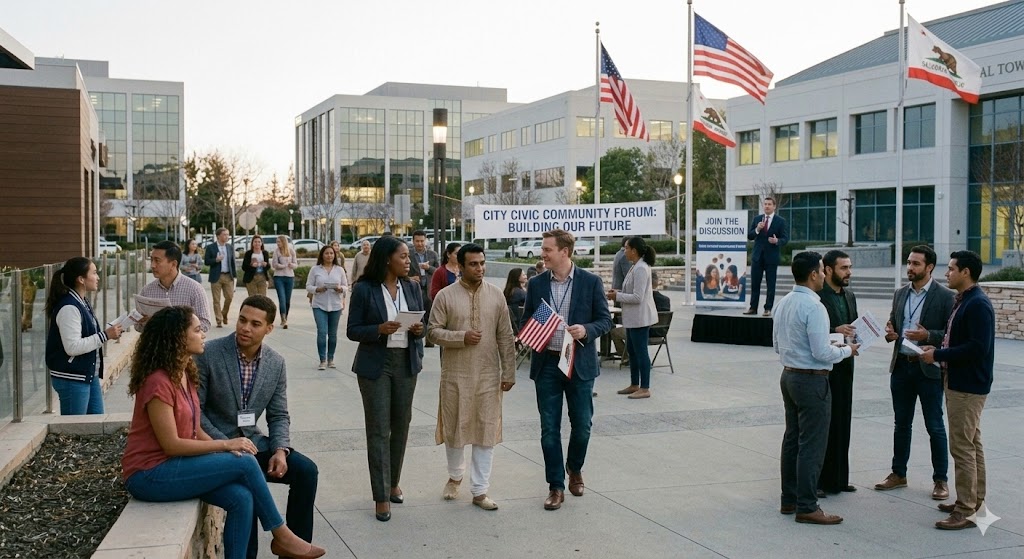
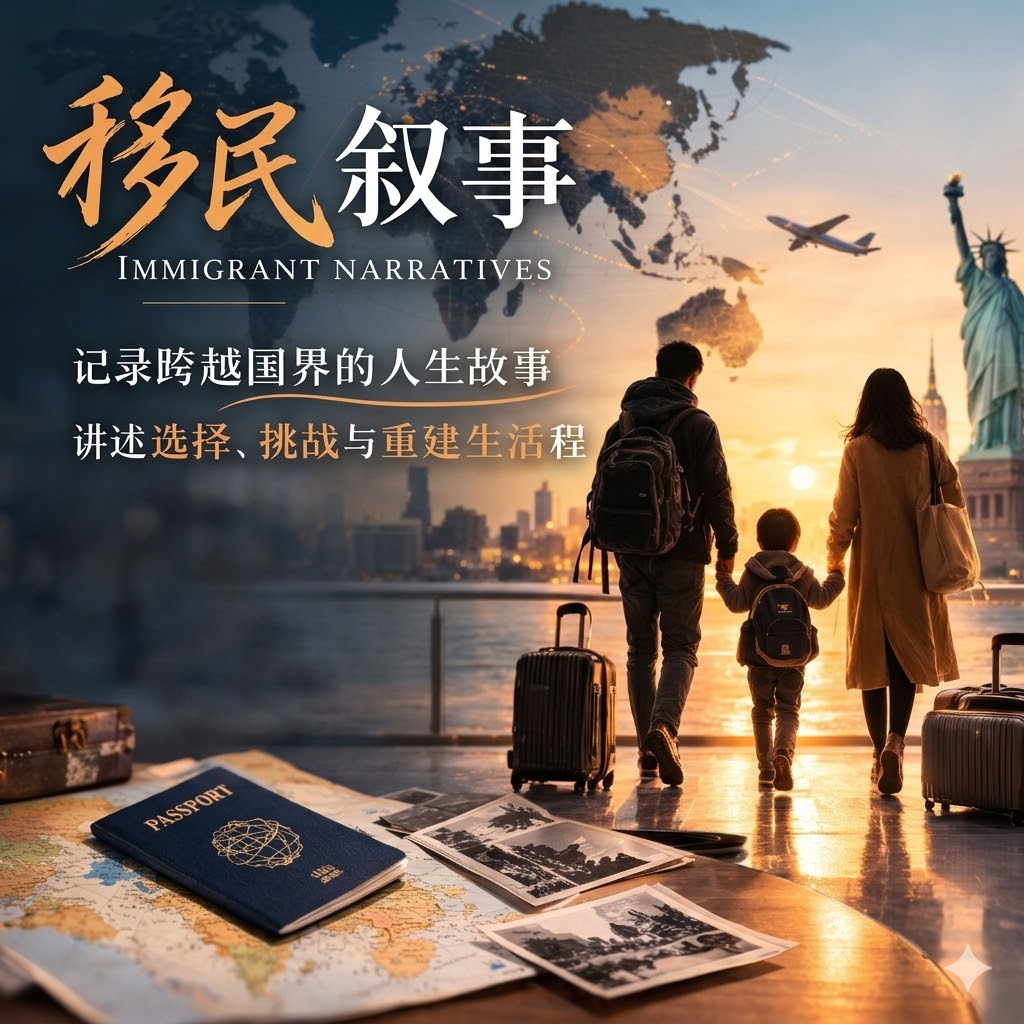
Abstract: In the life experiences of many Chinese immigrants, American society seems to present two images at the same time: on the one hand, it is open, diverse, and rule-abiding, and as long as you work hard, you have the opportunity to achieve a decent life; on the other hand, it seems distant and complex, as if there is always an invisible boundary between them.
Where does this distance come from? Understanding it may be the first step for Chinese people to truly enter American public life.
The social status of Chinese Americans has been a hotly debated topic on social media. Many Chinese immigrants' experiences suggest that American society presents two starkly different scenarios.
On the one hand, it is open, diverse, and rule-abiding; as long as you work hard, you have the opportunity to achieve a decent life.
On the other hand, it often seems distant, complex, and difficult to truly enter—as if there is always an invisible boundary separating it.
This boundary doesn't stem entirely from the system, nor solely from discrimination, but is formed by a combination of factors including history, culture, language, modes of political participation, and a lack of public expression. Understanding this distance may be the first step for Chinese Americans to truly integrate into American public life.
Looking back at history, when the first large-scale Chinese immigrants entered the United States in the mid-19th century, they were not "immigrant citizens" but rather cheap labor. They built the transcontinental railroad, worked in mines, and engaged in low-paying industries such as laundry and catering, becoming an indispensable part of the American industrialization process.
However, from the beginning, Chinese people were seen as a “temporary presence” – needed, but not expected to stay long-term.
This "functional acceptance" laid the initial foundation for the relationship between Chinese Americans and mainstream American society: their contributions were acknowledged, but their identity was not.
The passage of the Chinese Exclusion Act in 1882 enshrined this exclusion in law for the first time. It was the only federal law in U.S. history to explicitly target ethnicity and prohibit immigration and naturalization. It not only restricted population movement but, more importantly, affirmed at the national level the concept that Chinese people did not belong to the American political community.
Even though the act was repealed in 1943, its effects persisted in social psychology and institutional inertia. More than sixty years of legal exclusion created a profound and lasting structural root in the distance between Chinese Americans and mainstream American society.
In an environment where exclusion and insecurity coexist, the Chinese community has gradually developed a set of effective survival strategies: focusing on family and work, emphasizing education and economic accumulation, and avoiding political and public conflicts as much as possible.
This strategy has helped many families establish themselves in foreign countries and has also shaped the overall image of the Chinese community as "hardworking, orderly, and non-troublesome."
But the cost is equally clear: Chinese people have long been absent from public discussion and political participation.
When a group rarely appears in public spaces, it is easily overlooked;
When it gets used to being silent, others get used to speaking on its behalf.
By the mid-to-late 20th century, with changes in immigration policies and expanded educational opportunities, more and more Chinese families achieved economic and academic success. This gave rise to the social narrative of the "model minority"—law-abiding, hardworking, and without complaint, achieving upward mobility through personal struggle.
This narrative, while seemingly affirmative, actually creates new boundaries: success is taken for granted, while hardship and discrimination are systematically ignored. Chinese people are often excluded from public resources and policy discussions.
When a group is assumed to be "doing well," its real problems are often no longer listened to seriously.
If history explains how the distance between Chinese Americans and mainstream American society was formed, then the reality of contemporary Chinese immigrants shows that this distance has not naturally disappeared over time.
Over the past two or three decades, Chinese immigrants have achieved remarkable success in the fields of science, medicine, engineering, and scientific research. They are active in university laboratories, hospital systems, high-tech companies, and research institutions, and have become an indispensable professional force in American society.
However, in stark contrast to these achievements, they are relatively silent in the public sphere.
Society often sees the results, but rarely truly understands the people behind them—their upbringing, value judgments, public concerns, and long-term contributions to the community and society—lacking a systematic and continuous narrative.
This reality is closely related to the cultural habits that Chinese people have developed over a long period of time.
In many Chinese families, being low-key, reserved, and unassuming is considered an important principle of conduct. This kind of education cultivates down-to-earth, hardworking, and professionally focused individuals, but it also inadvertently weakens their ability to express themselves proactively, narrate their own stories, and speak out in public.
In a society like the United States, which relies heavily on expression, narrative, and public participation, "not speaking," "speaking less," and "not vying for the right to speak" are often not understood as humility, but rather as non-existence.
In terms of immigration structure, contemporary Chinese immigrants are mainly from STEM and functional professions. Engineers, programmers, doctors, and researchers are highly competitive in their respective fields, but are significantly scarce in the areas of culture, publishing, public affairs, and media expression.
Many people are not indifferent to public affairs, but subconsciously believe that it is a field they are not good at and have no competitive advantage in.
Over time, a gap has emerged in the public expression space for Chinese people.
At the same time, the Chinese community has long lacked a media platform that can continuously give it a voice. Many community cultural publications still mainly remain in traditional forms of expression such as poetry, prose, and essays, with a significant lack of sustained attention to local politics, public affairs, and community building.
For many first-generation immigrants, language barriers have further exacerbated this distance.
While internet technology has made daily communication more convenient, there is still a significant gap between it and genuine social interaction. Insufficient English proficiency does not mean an inability to understand society, but it often means a lack of full understanding and visibility.
Policies, elections, and public affairs are primarily communicated in English, effectively excluding many Chinese families from public participation.
Many new immigrants can only rely on Chinese media for information, and the limitations of the content of Chinese media further restrict their connection with mainstream society.
In reality, many mothers who accompany their children to study in the US have lived there for years but rarely leave their own neighborhoods, participate in public activities, or truly join any community organizations. Even when community activities do exist, they are often conducted entirely in English, creating a new barrier for new immigrants.
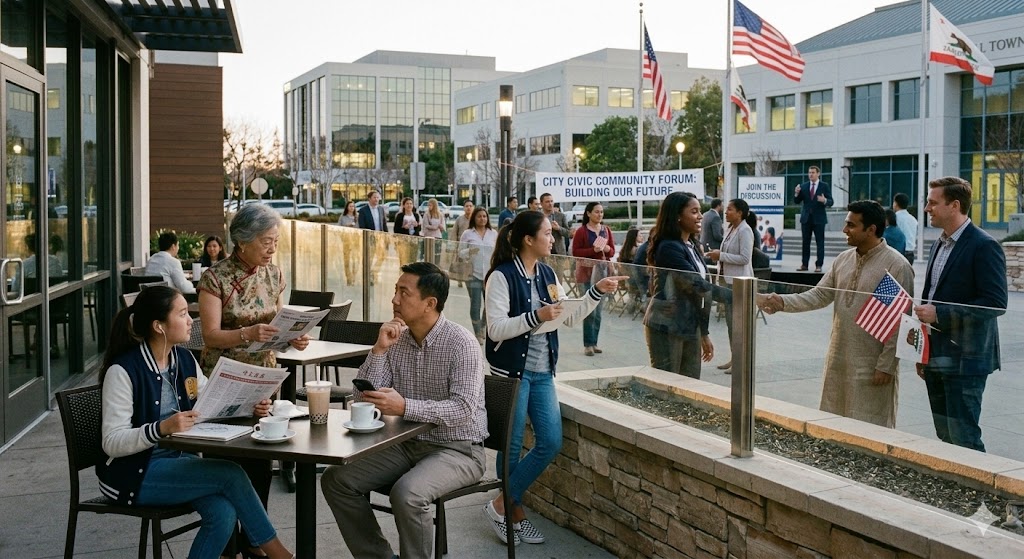
Today, the distance between Chinese Americans and mainstream American society is manifested more in the following ways:
Information asymmetry, lack of channels for expression, unfamiliarity with the system, and uncertainty about the consequences of participation.
It is not simply rejection, but a sense of rupture that has accumulated over a long period of time.
In this situation, the Chinese are "present," but not "at the table."
Bridging this gap is not something that can be achieved overnight, nor does it depend on a single event. It requires continuous and stable public dialogue, credible and long-standing ethnic media, an understanding of local politics and institutions, and the awareness and exercise of one's own rights.
True integration is not about disappearing into the mainstream, but about having a place, a voice, and dignity in the public sphere.
Understanding the distance between Chinese Americans and mainstream American society is not about reinforcing antagonism, but about finding ways to connect.
When Chinese people are able to understand the system, recognize their representatives, express their demands, and participate in public life using their familiar language, this invisible boundary will truly begin to loosen.
Expression is the first step toward public life;
Being heard is an important sign of integration into society.
The Cultural Observations section focuses on the history, culture, and public issues of Chinese Americans, presenting the interaction and changes between the Chinese American community and American society through commentary, research, and documentation.
English Note
About this Article
This article explores the historical and structural distance between Chinese immigrants and American public life. While many Chinese Americans have achieved remarkable success in fields such as science, technology, medicine, and education, their voices often remain underrepresented in public discourse and civic participation.
Tracing the roots historical of exclusion—from the era of Chinese railroad workers to the legacy of the Chinese Exclusion Act—the article reflects on how cultural habits, language barriers, and the lack of sustained community media have shaped this quiet distance.
Understanding this gap is not about reinforcing division, but about finding ways to reconnect. Public expression, storytelling, and community media are essential steps toward building a more visible and participatory Chinese presence in American society.
About the Author
Ryanna Ren is a publisher, writer, and cultural media founder based in Pittsburgh. She is the founder of TVOW Media and the initiator of the Chinese Voices platform, dedicated to documenting Chinese immigrant experiences and building a public space for Chinese voices in American society.
Column Introduction
Cultural Observations
The Cultural Observations column focuses on the historical, cultural, and social issues related to Chinese communities in the United States. Through essays, research, and commentary, it aims to deepen public understanding of Chinese immigrant experiences and their evolving role in American society.
If you would like to read other cultural observation articles:Cultural Observation

)
