 tvowmedia
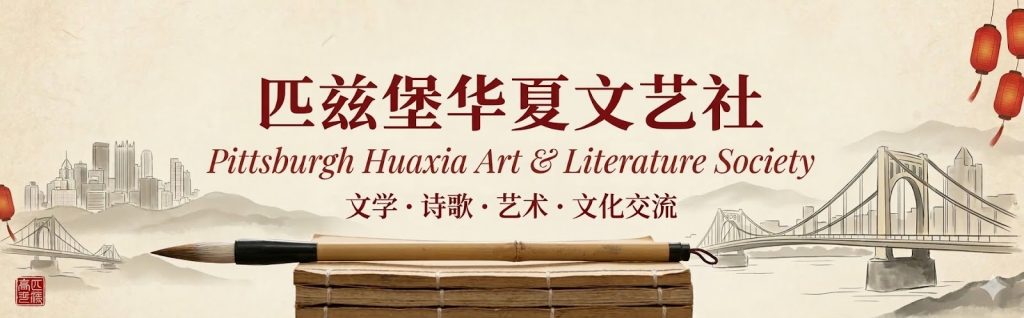
匹兹堡华夏艺术文学社 (Pittsburgh Huaxia Art & Literature Society) 是由华人文化与文学爱好者组成的文化交流团体,由匹兹堡华人作家 计冠光(笔名:海老KK) 发起成立。该社团致力于为大匹兹堡地区的文学与艺术爱好者提供一个交流创作与分享思想的平台,同时推动中华文化在海外的传播。
The Pittsburgh Huaxia Art & Literature Society is a cultural exchange organization formed by Chinese literature and arts enthusiasts. It was initiated by Pittsburgh-based Chinese writer Ji Guanguang (pen name: Hai Lao KK). The society is dedicated to providing a platform for writers, artists, and cultural enthusiasts in the Greater Pittsburgh area to exchange ideas, share creative works, and promote Chinese culture overseas.
匹兹堡华夏艺术文学社 汇聚了来自不同背景的华人作者、诗歌爱好者以及艺术创作者,通过文学交流、文化活动和艺术分享,促进社区文化生活的发展。
The society brings together Chinese writers, poetry lovers, and artists from diverse backgrounds. Through literary exchanges, cultural gatherings, and artistic activities, it helps enrich the cultural life of the Chinese community while encouraging the sharing of Chinese cultural traditions with the broader public.
主要活动
Major Activities
匹兹堡华夏艺术文学社 定期或不定期组织多种文化活动,包括:
The Pittsburgh Huaxia Art & Literature Society organizes various cultural and literary activities, including:
- 文学沙龙与诗歌朗诵
Literary salons and poetry readings - 文学作品分享与讨论
Sharing and discussion of literary works - 中国传统文化交流
Cultural exchange on Chinese traditions - 文化讲座与艺术交流
Cultural lectures and artistic dialogues - 社区文化活动参与
Participation in community cultural events
这些活动不仅为华人作者提供展示作品的空间,也让更多社区成员接触和了解中华文化。
These activities provide Chinese writers and artists with opportunities to present their work while allowing community members to experience and better understand Chinese culture.
文化意义
Cultural Significance
在海外华人社区中,文学社团往往承担着文化交流与精神交流的重要作用。 匹兹堡华夏艺术文学社 通过文学与艺术的形式,为华人社区创造了一个交流思想、分享文化的空间,也成为连接华人文化传统与海外生活的重要纽带。
Through literature and artistic exchange, the Huaxia Art & Literature Society provides a platform for cultural dialogue within the Chinese community while helping introduce Chinese cultural traditions to the broader public in Pittsburgh.
创始人海老KK
——在钢城守着一方中国文化的人
在匹兹堡的文化活动现场,如果你稍微留意一下,总能看到一个熟悉的身影。
人群之中,一个小小的摊位前,总是围着不少人。桌子上摆着几本书,还有一些与中国文化有关的资料。有人停下来翻书,有人聊几句中国文化,也有人只是好奇地看看。
摊位后面那位温和地与人交谈的人,往往就是——
海老KK。
他的本名叫 Ji Guanguang。
在匹兹堡华人社区里,这个名字并不张扬,但却被很多人熟悉。几乎每一次文化活动、社区节庆或文化交流活动,都能看到他的身影。
有人说,他更像是活动里的“老朋友”。
而他的摊位,则像一个临时出现的小小文化角落。
一个总是热闹的摊位
在匹兹堡的华人文化活动上,摊位很多。
有卖食物的,有展示艺术的,也有社区机构的介绍。
但海老KK的摊位却总有一点特别。
桌子上摆着他的书,也摆着一些中国文化相关的资料。有人翻看他的文章,有人和他聊诗词,也有人只是被那些带着中国文化气息的文字吸引过来。
他不急着介绍什么,只是慢慢地聊。
有时候聊中国诗词,有时候聊茶文化,也有时候聊匹兹堡的华人故事。
渐渐地,人就多了起来。
他的摊位前,总是有 络绎不绝的人群。
有人买书,有人聊天,也有人只是停下来听听中国文化的故事。
那一小块地方,像一个临时出现的文化客厅。
一个带着海风的笔名
计冠光写作时用的笔名是 海老KK。
这个名字有一点意味。
“海”,是海外。
“老”,是一种文人的自谦。
很多在海外生活的华人,会用一个词形容自己:
海漂。
漂在海那一边的人,在不同城市生活、停留,又继续前行。
海老KK后来把自己的文集取名为:
《海漂缀拾》
“海漂”,是生活的状态;
“缀拾”,是写作的方式。
他写的文章,往往不是宏大的叙事,而是生活里的小片段:一场演出、一杯茶、一段旧事,甚至是一句古诗带来的联想。
这些文字像散落在时间里的碎片,被他一点一点拾起,再慢慢写出来。
在钢城写中国文化
匹兹堡是一座很特别的城市。
这座城市曾经因为钢铁工业而闻名,因此有一个外号——
Steel City,钢城。
巨大的桥梁、河流和老工业建筑,构成了这座城市的历史。
而在这样一座工业城市里,也有着自己的文化生活。
随着华人社区的发展,匹兹堡逐渐出现了文化中心、中文学校、艺术团体和各种文化活动。
在这些文化活动的背后,有一些人一直在默默推动。
海老KK正是匹兹堡中华文化中心的创始人之一。
多年来,他始终对中国文化怀有深厚的感情,也一直努力让中国文化在这座城市被更多人看到、听到、了解。
文化中心的活动、社区的文化交流、华人文化的展示——
这些事情,他几乎都参与其中。
很多人说,如果去匹兹堡的华人文化活动现场,总能看到他。
互联网时代的“旧式文人”
如今很多写作都发生在社交媒体上。
但海老KK的写作方式,却有一点像过去的文人。
他习惯在 美篇 上发表文章。
在那里,他写诗,写随笔,也写文化观察。
他的文字常常会引用:
唐诗
宋词
中国古典文学
茶文化
读起来,有一点像旧报纸副刊上的文章,也像文人之间的书信。
不喧哗,却耐读。
一本书,一段时间
在亚马逊上,可以找到他的文集之一:
《海漂缀拾:海老文集》
这本书收录了他多年写下的文章。
有文化随笔,有诗词,也有生活记录。
那些文章并没有刻意写“海外华人故事”,
但每一篇文字里,其实都带着一种海外生活的影子。
城市在变化,时间在变化,
而文字把这些变化慢慢留下来。
在城市里守着一盏灯
匹兹堡的华人社区不算很大,但文化生活却一直存在。
有文化中心,有中文学校,也有艺术团体。
而像海老KK这样的人,则用另一种方式参与其中——
用文字记录。
他在活动现场摆摊、与人聊天、推广书籍,也写文章、写诗、写文化随笔。
这些事情看起来都很普通。
但正是这些普通的事情,让一座城市里的华人文化慢慢积累起来。
写字这件事
有时候,人写字并不是为了成为作家。
只是因为写字本身就是一种生活。
在匹兹堡的某个夜晚,也许有人正在电脑前敲下几行文字。
那些文字可能是诗,也可能只是随笔。
而多年以后,当人们回头看时,也许会发现——
那些文字,其实记录了一段属于海外华人的文化历史。
海老KK的写作,大概就是这样的一种存在。
Hai Lao KK: A Guardian of Chinese Culture in the Steel City
At cultural events in Pittsburgh, if you look closely, you will almost always notice a familiar figure.
In the middle of the crowd, there is often a small booth surrounded by people. A few books lie on the table, along with materials related to Chinese culture. Some visitors stop to flip through the books, others chat about Chinese traditions, while a few simply pause out of curiosity.
The gentle man standing behind the table, speaking warmly with visitors, is often Hai Lao KK.
His real name is Ji Guanguang.
Within Pittsburgh’s Chinese community, his name is not particularly loud or prominent, yet it is widely recognized. At nearly every cultural event, community festival, or cultural exchange gathering, his presence can usually be found.
Some people say he is more like an “old friend” at community events.
And his booth feels like a small cultural corner that appears wherever the community gathers.
A Booth That Is Always Lively
At Chinese cultural events in Pittsburgh, there are many booths.
Some sell food.
Some display artwork.
Others introduce community organizations.
But Hai Lao KK’s booth always feels a little different.
On the table are his books, along with materials related to Chinese culture. Some people browse through his writings; others start conversations about classical poetry. Some are simply drawn in by the atmosphere of culture and literature.
He never rushes to promote anything. Instead, he talks slowly and patiently.
Sometimes the conversation turns to Chinese poetry.
Sometimes to tea culture.
Sometimes to stories of Chinese life in Pittsburgh.
Gradually, more people gather.
There is almost always a steady flow of visitors in front of his booth.
Some buy books.
Some stop to chat.
Others simply listen to stories about Chinese culture.
That small space becomes something like a temporary cultural living room.
A Pen Name Carried by the Sea
When Ji Guanguang writes, he uses the pen name Hai Lao KK.
The name itself carries a certain meaning.
“Hai” refers to the sea, symbolizing life overseas.
“Lao” reflects the humble tone often adopted by traditional Chinese scholars.
Among overseas Chinese, there is a vivid expression for their condition:
“Hai Piao” — drifting across the seas.
It describes people living abroad, like small boats drifting from one city to another.
Hai Lao KK later titled one of his collections:
Gatherings of a Sea Drifter
(Hai Piao Zhui Shi)
“Drifting overseas” describes the state of life.
“Gathering fragments” describes the act of writing.
His writings are rarely grand narratives. Instead, they are small moments from daily life: a performance, a cup of tea, an old memory, or even a reflection inspired by a line of classical poetry.
These fragments are like scattered pieces of time, slowly collected and woven together through words.
Writing Chinese Culture in the Steel City
Pittsburgh is a unique city.
Once famous for its steel industry, it carries the nickname:
The Steel City.
Bridges, rivers, and old industrial buildings form the city’s historical landscape.
Yet within this industrial city, a quiet cultural life has always existed.
As the Chinese community grew, Pittsburgh gradually saw the emergence of Chinese cultural centers, Chinese language schools, artistic groups, and many community cultural events.
Behind these activities are individuals who quietly devote themselves to cultural work.
Hai Lao KK is one of the founders of the Pittsburgh Chinese Cultural Center.
For many years, he has held a deep affection for Chinese culture and has consistently worked to make Chinese traditions visible and accessible in the city.
Cultural center programs, community events, and cultural exhibitions — he has participated in many of them.
Many people say that if you attend Chinese cultural events in Pittsburgh, chances are you will see him there.
An Old-Style Scholar in the Internet Age
Today, much writing takes place on social media.
Yet Hai Lao KK’s writing style carries something of an older literary spirit.
He often publishes his essays on Meipian, a Chinese online platform that resembles a hybrid of a blog and a personal literary journal.
There he writes poetry, essays, and cultural reflections.
His writings frequently reference:
Tang poetry
Song poetry
Classical Chinese literature
Tea culture
Reading his work can feel a little like reading the literary pages of an old newspaper or letters exchanged between scholars.
Quiet, unhurried, yet enduring.
A Book, A Passage of Time
One of his collections available on Amazon is titled:
Hai Piao Zhui Shi: Collected Essays of Hai Lao
The book gathers many of the essays he has written over the years.
The themes vary widely: culture, daily life, memories, and reflections.
Although the book is not explicitly framed as “overseas Chinese stories,” each piece quietly reflects the experience of living abroad.
Cities change.
Time moves forward.
But writing preserves those moments.
Keeping a Light for Culture
Pittsburgh’s Chinese community is not particularly large, yet its cultural life has remained vibrant.
There are cultural centers, Chinese schools, and artistic groups.
And writers like Hai Lao KK participate in a different way:
Through writing.
He sets up booths at community events, speaks with visitors, shares books, and writes essays, poems, and reflections.
These activities may seem ordinary.
Yet it is precisely these ordinary efforts that allow the cultural life of a community to slowly accumulate over time.
The Meaning of Writing
Sometimes people write not to become famous authors.
They write simply because writing itself is a way of living.
On some quiet night in Pittsburgh, someone may sit in front of a computer and type a few lines.
Those words may be poetry.
Or they may be just a simple reflection.
Years later, when people look back, they may discover that those words recorded something more:
A piece of the cultural history of overseas Chinese.
Hai Lao KK’s writing is perhaps just such a presence.