 tvowmedia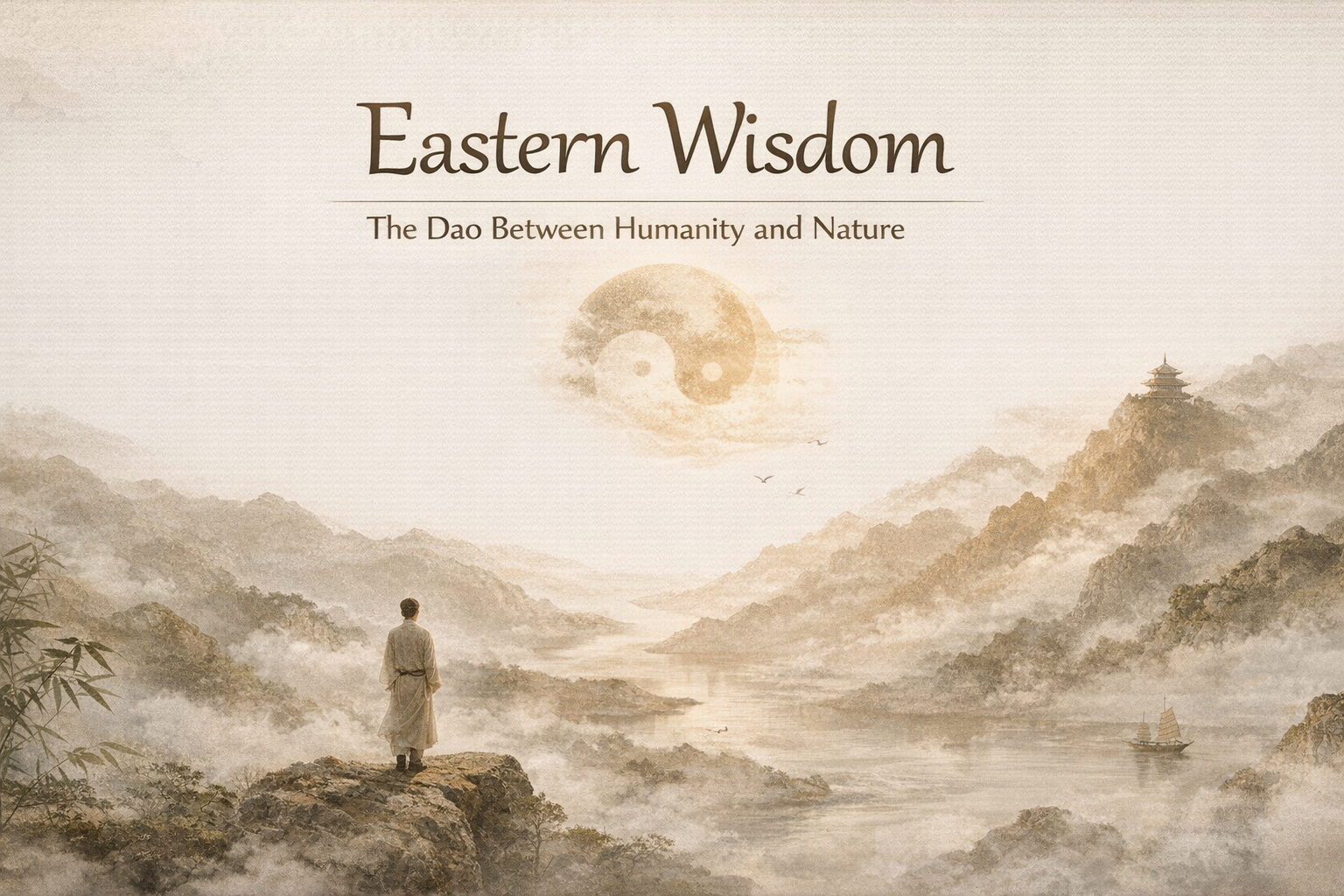
—— 东方智慧 ,不是神秘的力量,而是一种看待世界的方式。
一直以来,我都想做一档栏目,写一系列关于“东方智慧”的文章。现在,我把这个栏目正式命名为——《东方智慧》。

我一直在思考一个问题:东西方在文化上的差异到底在哪里?或者说,它们的根本区别是什么?
从东方人的角度来看,西方人往往会觉得东方文化、东方文明是“神秘的”。他们对东方的神话体系充满兴趣,也对这种“神秘感”产生了很强的好奇。
但在我看来,所谓的“东方智慧”,首先是一种文化。
很多西方人会把它理解为“中国神话”,甚至认为中国人是“信神”的。但其实,“信神”更多是西方文化的一部分。在西方的宗教体系中,人们往往会围绕一个“神”展开信仰,并按照神的旨意去生活和行动。
而中国,自古以来有着五千年的文化历史,却并没有一个从始至终、始终不变的唯一之神。
在不同的时代,会有不同的“神”的形象,但这些“神”是不断变化的,是时代的产物。也正因为如此,中国人整体来说,在日常生活中,并不是在“信神”。
那么,中国人信的是什么?
其实,中国人更接近于“信道”。
关于“道”,在现实生活中有很多具体的体现。比如我们常说“道法自然”,也就是说,中国文化中真正的“本教”,是“道”。道者﹐以诚而入﹐以默而守﹐以柔而用。
很多人会把“道教”与“道”混为一谈,但实际上,道教只是“道”的一种表现形式,它只是中国文化中“道”的一部分。真正的“道”,讲的是一种人与自然之间的关系。
道、法、器、气、天道
比如我们常说的:
道(Dào)——根本规律
“道”是一切的根本,是宇宙运行的规律。它不是一个具体的东西,也不是一个“神”,而是一种看不见但始终存在的秩序。比如四季更替、生老病死、万物循环,这些背后的“规律”,就是“道”。
可以理解为:世界为什么会这样运转的“根本原因”。
法(Fǎ)——顺应规则的方法
“法”是人如何去顺应“道”的方式。当你理解了“道”,就要找到适合的方法去跟随它。比如顺势而为、不违自然、做事有分寸。
可以理解为:人如何与世界正确相处的方法。
器(Qì)——具体的工具与形式
“器”是承载“道”和“法”的具体形式。它可以是工具,比如风水、八卦、符号;也可以是制度、规则、体系,甚至语言和仪式。
可以理解为:把抽象变成可以操作的工具。
气(Qì)——流动的能量
“气”是连接人与自然的一种能量流动。在东方文化中,人有气,空间有气,环境也有气。它在不断流动、变化,并影响人的状态。比如情绪影响身体,环境影响运势,人与人之间也有“气场”。
可以理解为:一种看不见但能感受到的能量状态。我们常说的“气数”,某种程度上也与天道、命运相关。
天道(Tiān Dào)——更高层的规律
“天道”是超越个人的、更大的自然法则。它指的是宇宙的整体秩序,是不以个人意志为转移的规律。比如盛极必衰、因果循环、平衡法则。
可以理解为:人无法改变、但必须敬畏的大规律。
所以可以简单地说:
道,是规律;
法,是方法;
器,是工具;
气,是能量;
天道,是更高层的秩序。
这些概念,其实并不只存在于书本之中,而是一直贯穿在中国人的日常语言和生活里。很多时候,我们甚至没有意识到,自己已经在使用“道”。
比如我们会说:
“蚂蚁不尿尿,各有各的道”
“你是哪个道上的?”
“这个做法不合道”
这些话听起来很生活,很接地气,但背后其实都在表达同一个东西。
在这些语境中,“道”不再是一个抽象的哲学词汇,而是一种已经融进生活的判断方式。它可以是一个人做事的路径,是一种处世的方法,也是一种对“对与错”“合与不合”的直觉判断。
有时候,我们并不会刻意去解释它,但却会下意识地觉得:这件事“对”,或者“哪里不对”。
再往深一点看,这里的“道”,其实就是一种“天理”,一种顺应万物运行的“规律”。甚至可以说,它带着一点“天命”的意味——不是强加给你的,而是你在某一刻,会突然明白、或者隐约感受到的那种“应该如此”。
也正因为这样,“道”在中国人的生活中,从来不是高高在上的概念,而是一种被不断使用、不断体会的存在。
“道”为什么如此重要
在中国文化中,“道”的重要性,其实远比我们日常意识到的更深。
比如《道德经》,很多人都听说过,也有不少人尝试去读,但真正能够读懂的人却不多。它的语言看似简单,却蕴含着极为深刻的思想体系。
但即便如此,《道德经》也并不能完全诠释“道”的全部内涵。因为“道”本身,就不是一部书可以说清楚的。它更像是一种存在于天地之间的规律,一种需要被体会,而不是被定义的东西。
在现实生活中,中国人其实一直在使用“道”。我们会尊重它、敬畏它,也会在不自觉中按照它去做出判断和选择。只是,大多数时候,这种使用是下意识的,是习惯性的。
我们在生活中不断地“用道”,却很少停下来,认真去想一想:我们所说的“道”,到底是什么?
“道”的不同表达方式
“道”的表达方式,其实有很多种。
比如道教,它通过符咒、语言、仪式等方式,尝试去调节人与自然之间的关系,去影响人与环境之间的“能量”和“磁场”,从而达到一种“顺应天意”的状态。
再比如《易经》与八卦,这些常常被认为神秘的体系,本质上也都在讲同一个东西——“道”。
它们通过天干地支、五行等系统,去描述一个人在出生那一刻,与宇宙之间所形成的关系;以及随着时间的流动,这种关系如何发生变化,从而对个人产生影响。
归根结底,这一切都在指向同一个核心:
人与自然的关系。
为什么会被误解为“迷信”?
那么,为什么这些内容,会被很多人理解为“迷信”?
其中一个很重要的原因,是因为“人与自然的关系”本身就极其复杂,也非常深奥。有些部分,现代科学还无法完全解释;有些体验,也很难用标准化的语言去表达。
在传播的过程中,如果只抓住其中的某一个片段,并把它不断放大,就很容易偏离原本的逻辑,演变成所谓的“伪科学”,甚至被推入一个灰色甚至被限制的领域。
但与此同时,也有越来越多的人开始重新思考这些问题。
他们开始意识到——人与自然之间,确实存在着某种关系,而这种关系,并不只是表面所看到的那样简单。
命、运与人的改变
在这个体系中,“道”往往也会和“命”联系在一起,而“命”,又与“运”相连。
命,是先天的。
运,是后天变化的过程。
也就是说,一个人的人生,是由“先天”与“后天”共同组成的。
这也解释了为什么:有的人会觉得“算命不准”,而有的人却觉得“非常准”。
因为有些人,在后天的生活中,通过自己的行为、习惯和选择,改变了原有的轨迹;而有些人,则是在顺着既有的轨道前行。不同的选择,带来的,是不同的人生走向。
此外,人们之所以会信仰宗教,还有一个很现实的原因:宗教可以约束人的行为与内心。
当一个人心地善良、行为正向时,他所处的“能量”和“磁场”,也会随之发生变化,从而影响他的人生方向。
中国还有一句话,叫做:“境由心转”。
意思是,一个人所处的环境,会随着他的内心状态而改变。你的心态,会影响你周围的“能量”和“磁场”,进而影响你所经历的现实。
这或许在某些理论中会被称为“唯心主义”,但在真实的人生经验中,这种影响,是切实存在的。
我所理解的东方智慧
所以,在我看来, 东方智慧 虽然看起来深奥,但如果归纳起来,其实很简单:
它讲的,就是人与自然的关系。
而且——
人,是可以改变的;
自然,也会随着人的改变而变化。
这,或许就是我所理解的“东方智慧”。
我也希望,通过这个栏目,能够用最浅显的语言,把这些原本复杂的内容慢慢讲清楚,让更多的人理解东方智慧,而不是误解它。
东方智慧,不是答案,而是一种看世界的方式。
Eastern Wisdom: The “Dao” Between Humanity and Nature
Eastern wisdom is not a fixed answer, but a way of understanding the world.
For a long time, I have wanted to create a column—to write a series of reflections on what I call “Eastern wisdom.”
Now, I have finally given it a name: Eastern Wisdom.
I have often found myself thinking about one question:
What is the fundamental difference between Eastern and Western cultures?
From an Eastern perspective, many people in the West see Eastern culture as something mysterious.
They are fascinated by its myths, symbols, and traditions, often drawn to what feels like an unexplained depth.
But in my view, this sense of mystery is often a misunderstanding.
Because Eastern wisdom, at its core, is not about mystery.
It is about culture.
Many people interpret it as “Chinese mythology,” or assume that Chinese people “believe in gods.”
But in fact, the idea of “believing in a single God” belongs more to Western traditions, where faith is often centered around a supreme being whose will guides human behavior.
China, however, with its five thousand years of history, has never had one single, unchanging, absolute god.
Different eras have had different symbolic figures, different narratives, different beliefs.
They evolved with time, shaped by history.
And because of this, Chinese people, in their everyday lives, are not really “believing in gods.”
So what do they believe in?
They believe in something else.
The Dao
Chinese people are, in many ways, closer to believing in something called the Dao.
The Dao is not a god.
It is not something you can see or name directly.
It is a principle, a pattern, a way in which the world unfolds.
When we say “following the Dao,” we are not talking about worship.
We are talking about understanding how things naturally work—and aligning with it.
This is why, in Chinese culture, people often say:
“Dao follows nature.”
One enters the Way with sincerity,
abides in it through silence,
and expresses it through gentleness.
And this is also why what many call “Daoism” is only one expression of something much larger.
The Dao itself is not limited to religion—it is a way of understanding the relationship between human beings and the natural world.
Dao, Fa, Qi, and Tian Dao
Within this cultural framework, several ideas are often used together:
Dao — the underlying principle of the universe
Fa — the methods of following that principle
Qi — the flow of energy
Tian Dao — the greater order beyond human control
In simple terms:
The Dao is the law of how things are.
Fa is how we act in accordance with it.
Qi is the invisible energy that connects everything.
Tian Dao is the larger order we must respect, whether we understand it or not.
The Dao in Everyday Life
The Dao is not just a philosophical concept.
It lives in everyday language.
People say things like:
“Everyone has their own way.”
“Which path do you belong to?”
“That doesn’t follow the Dao.”
These phrases may sound casual, even simple, but they carry a deeper meaning.
The Dao, in these moments, becomes a kind of intuitive judgment.
A way of sensing whether something feels right—or not.
It is not something we calculate.
It is something we recognize.
At a deeper level, it reflects what we might call “natural order,” or even “the way things are meant to be.”
Not imposed, not forced—but quietly understood.
Why It Is Often Misunderstood
When expressed through forms like rituals, symbols, or systems such as the I Ching and the Eight Trigrams, these ideas are often labeled as “mystical” or even “superstitious.”
But the issue is not the ideas themselves.
It is how they are understood.
The relationship between humans and nature is complex.
Some aspects are still beyond what modern science can fully explain.
When only fragments are taken out of context and exaggerated, they can easily be misinterpreted as superstition or pseudoscience.
And yet, at the same time, more people are beginning to reconsider these ideas.
They are starting to sense that there is indeed a deeper relationship between human beings and the world around them.
Fate and Change
Within this framework, the Dao is often connected to the idea of fate.
In Chinese thought:
Fate (Ming) refers to what is given at birth
Fortune (Yun) refers to how things change over time
Life is shaped by both.
This helps explain why some people feel that predictions are accurate, while others do not.
Because some people change—through choices, habits, and actions.
And others follow a path without deviation.
Different choices lead to different outcomes.
The Power of the Mind
There is another important idea:
Religion, in many cases, exists not only as belief, but as a way to guide human behavior.
When a person acts with kindness and integrity, their “energy” changes.
Their environment responds differently.
In Chinese culture, there is a phrase:
“The environment shifts with the heart.”
It means that your inner state shapes your external world.
Your mindset affects your energy, your relationships, and ultimately your life experience.
Some may call this idealism.
But in lived experience, it is very real.
What Eastern Wisdom Really Is
So in the end, what is Eastern wisdom?
It may seem complex, but it can be distilled into something simple:
It is about the relationship between human beings and nature.
And more importantly:
Human beings can change.
And as we change, the world around us changes with us.
Why This Column Exists
This is what I understand as Eastern wisdom.
And through this column, I hope to express these ideas in the simplest and most accessible way possible.
Not to make them more mysterious,
but to make them more understandable.
So that more people can begin to see Eastern wisdom not as something distant or obscure—
but as a way of understanding life itself.
Eastern wisdom is not a fixed answer, but a way of understanding the world.