
 tvowmedia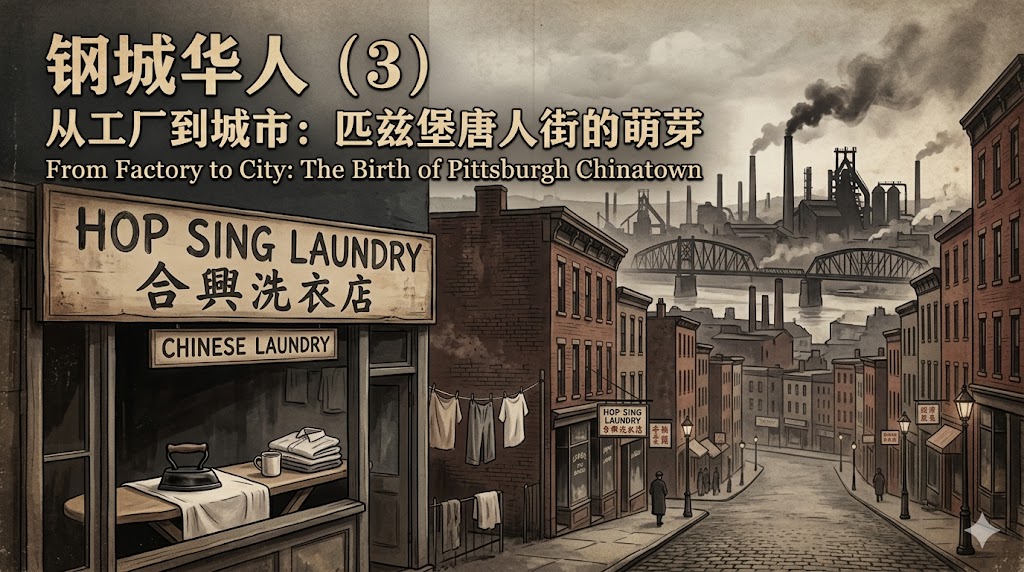
海狸瀑布的工业实验虽然只持续了短短几年,却在宾夕法尼亚州西部的华人移民史上留下了重要的一页。
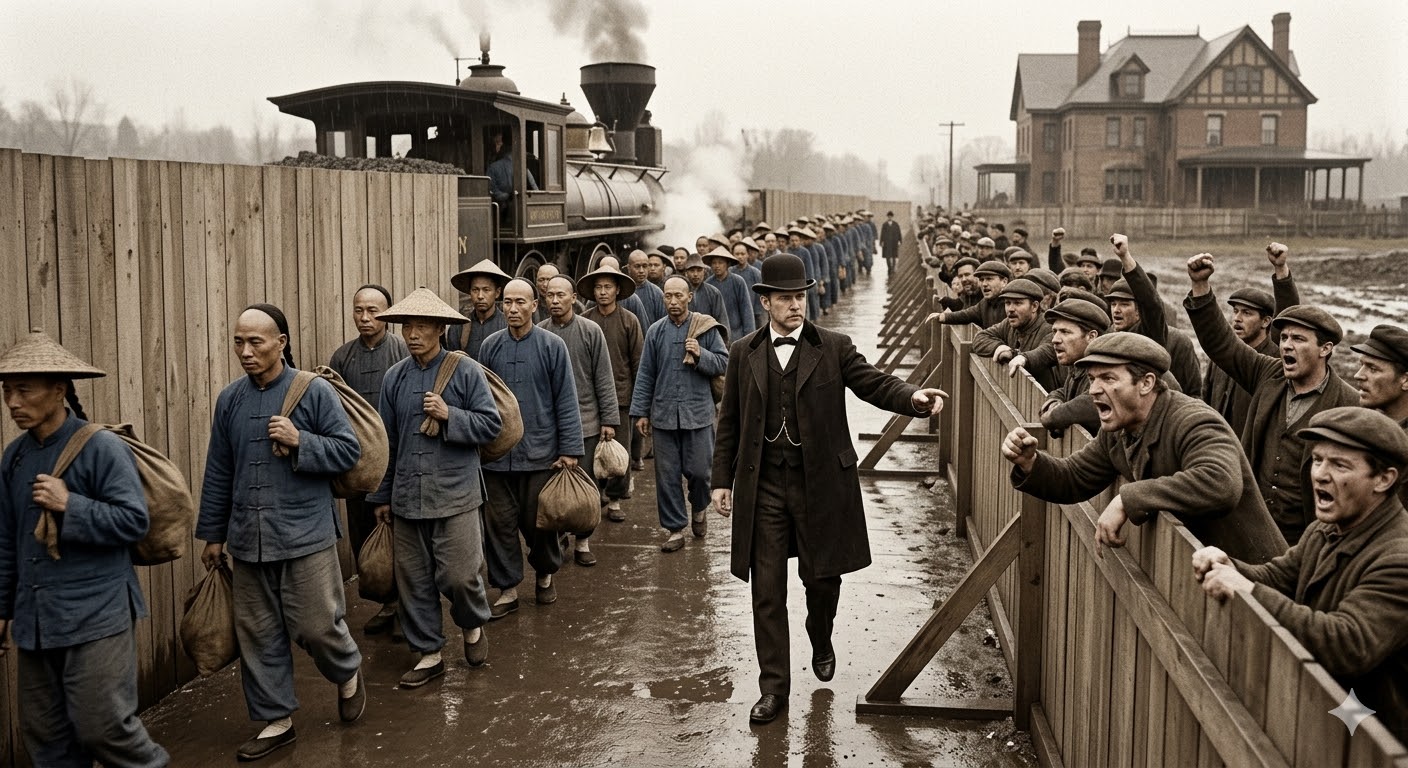
当餐具厂的生产逐渐衰落,华工合同陆续结束,许多失去工作的工人不得不面对新的选择。返回加州固然是一种可能,但对不少人来说,路途遥远、费用高昂,并不现实。
于是,一部分华工开始在宾夕法尼亚西部重新寻找机会。
他们沿着铁路与河流向南移动,逐渐来到不远处的工业中心——匹兹堡。这座正在迅速崛起的钢铁城市,吸引着来自各地的劳工、商人和移民。对于这些华工来说,匹兹堡不仅意味着新的谋生机会,也意味着建立华人社区的可能。
在随后的几十年里,一些早期来到匹兹堡的华工,逐渐从工厂劳动者转向小本经营者。他们开设洗衣店、小餐馆和杂货铺,在城市夹缝中寻找立足之地。围绕第二大道(Second Avenue)一带,一个规模不大却颇具活力的华人社区,开始慢慢成形。
这,便是后来被人们称为“匹兹堡唐人街”的最早雏形。
从工厂到洗衣店与餐馆
19世纪末,随着美国排华情绪不断上升,华人在劳动力市场中的处境日益艰难。像匹兹堡这样以钢铁工业为主的城市,大多数大型工厂和钢铁企业都不愿雇佣华工。
因此,那些曾经在海狸瀑布餐具厂工作的工人,来到匹兹堡之后,已很难再进入重工业领域。为了维持生计,他们不得不转向那些与白人工人直接竞争较小、资本投入相对有限的行业,例如洗衣店、小型餐馆和杂货铺。
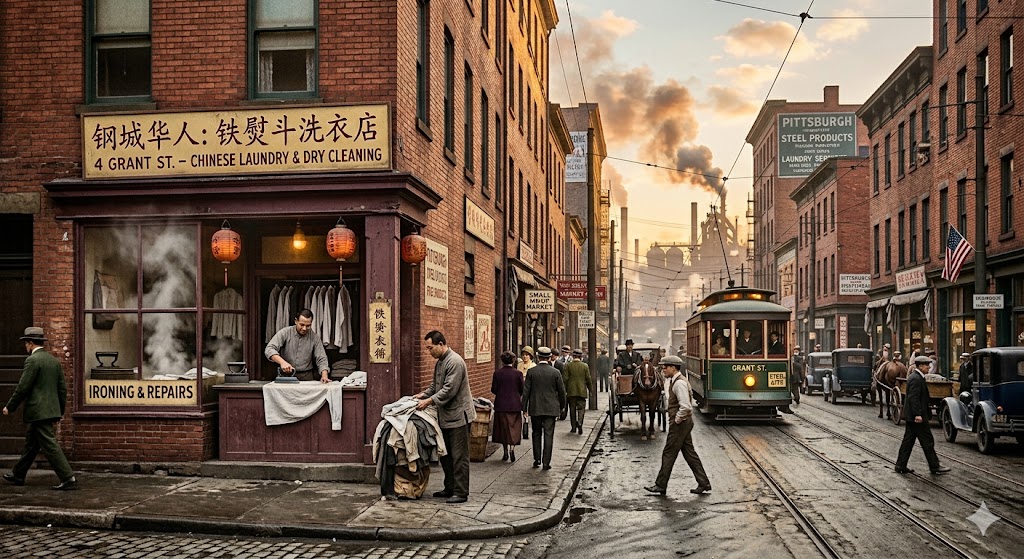
在匹兹堡市中心 Grant Street 与 Ross Street 一带,一批华人移民开始逐渐聚集。他们在街道两旁经营洗衣店和餐馆,也在附近居住、生活。随着时间推移,这片并不起眼的街区,逐渐发展成匹兹堡最早的华人社区。
后来,人们把这里称作“匹兹堡唐人街”(Pittsburgh Chinatown)。
这个社区的早期成员中,不少人正是从海狸瀑布来到匹兹堡的华工。他们曾在工业工厂中劳作,如今却在城市服务业中重新寻找自己的位置。命运将他们从磨刀石与机器轰鸣之间,推向熨斗、灶台与柜台之后;而他们也正是在这样一条艰难的转身之路上,为匹兹堡华人经济的萌芽埋下了种子。
到20世纪20年代,第二大道附近的华人商铺已经相当集中,这一带甚至被当地人称为“Chinese Wall Street”(华人华尔街)。在那个时期,这里不仅是华人商业活动的中心,也成为华人社会生活的重要枢纽。
历史回响与文化遗存
海狸瀑布的这场工业实验,仅持续了短短四年,却在很长一段时间里几乎被遗忘在地方历史的角落。
随着时间推移,这段关于华工的故事逐渐淡出公众视野,只在零散的地方志、旧报纸和学术研究中留下些许痕迹。直到近些年,一系列新的考古发现和历史文献整理,才让这段尘封往事重新进入公众视野。
研究人员在旧厂区附近发现了一些与华工生活相关的遗物,包括陶瓷碎片、生活用品以及当时使用的工具。这些实物与档案资料相互印证,使人们得以重新理解19世纪华工在宾夕法尼亚西部工业发展中的角色。
与此同时,当地历史学者也开始重新审视海狸瀑布餐具厂的“华工实验”。他们逐渐意识到,这不仅是一段关于劳工与资本的工业史,也是一段美国早期华人移民史的重要篇章。
尽管当年的华工社区早已消失,但他们留下的历史痕迹依然提醒着后人:在美国工业化的早期阶段,华人劳工也曾参与其中,并在这片土地上留下过自己的印记。
《红楼梦》与华人的精神世界
2014年,在海狸瀑布当地一家历史博物馆中,人们发现了一件极为珍贵的文物——一页《红楼梦》木刻本残卷。
这页书页印在宣纸上,并配有精细插图。研究人员推测,它很可能是19世纪某位华工随身携带来到美国的书籍残片。对于远离家乡的华人劳工而言,这样一本书,早已不仅仅是一件阅读材料,更是一种精神寄托,是一段与故土之间不愿断裂的联系。
在每天长达十一小时的高强度劳动中,在随时可能遭遇种族敌意甚至暴力威胁的环境里,这些工人依然带着来自故乡的文化记忆。像《红楼梦》这样的古典文学作品,成为他们与中国之间一条隐秘却坚韧的纽带。
这一发现也提醒我们,19世纪的华工,并非只是被简单定义的“廉价劳动力”。他们之中,有人识字、有阅读、有精神世界。即使身处遥远而粗粝的工业城镇,他们仍在某种程度上延续着中国传统文化的记忆与表达。
在钢铁与机器的喧嚣之间,这页《红楼梦》的残卷,仿佛为那段艰难而粗粝的历史,留下了一束微弱却温柔的人文之光。
永久的安息:消失的墓地
在那段动荡而艰难的岁月里,至少有十名华工在海狸瀑布去世。
他们最初被安葬在一处名为 Barnard Cemetery(巴纳德公墓)的墓地。这片墓地位于城镇边缘的荒地之中。根据当时记载,一些华工在祭奠同伴时,会在墓前摆放食物,并佩戴白色袖章,以表达哀悼之情。对于周围社区而言,这种带有东方传统色彩的丧葬仪式显得陌生,甚至带着某种神秘感。
然而,这些华工最终的归宿,在历史记载中却并不清晰。
一种说法认为,后来有一位身份不明的资助者出资,将这些华工的遗骨迁出并运回中国,按照传统习俗重新安葬;另一种更为悲观的说法则指出,随着城镇发展和土地开发,这片墓地最终被清理,遗骨也随之消失无踪。
无论真实情况如何,当年的 Barnard Cemetery 如今已不复存在。那片土地后来被纳入海狸瀑布的工业遗址范围,成为城市发展的一部分。而那些埋葬于此的华工,也被时间一点点掩埋。
他们的名字没有留下,墓碑也不复存在,但他们的劳动与生命,早已融入这片工业土地的历史之中。
结语:宾夕法尼亚华人历史的起点
1872年的海狸瀑布工业实验,是美国东部工业史和华人移民史中的一个关键时刻。
这不仅是一场关于利润与效率的资本实验,也是一场关于劳工、种族与社会秩序的历史试验。企业主试图通过跨越半个地球调动劳动力,以削弱地方工人的罢工力量;而在这一过程中,种族差异也被不断利用和放大,成为工业冲突的一部分。
然而,这段历史,并不只是压迫与冲突的记录。
在严苛的劳动制度和浓重的社会敌意之下,华工同样展现出顽强的生存能力。他们曾通过罢工表达不满,也在艰难环境中努力保存文化记忆——那页随身携带的《红楼梦》残卷,正是最有力的象征。
当这批工人在1877年前后离开海狸瀑布、进入匹兹堡寻找新的生计时,他们带走的不只是劳动经验,更是一种在陌生社会中求生、适应并重建生活的能力。
海狸瀑布的工业实验或许已经结束,但它点燃了宾夕法尼亚西部华人社区的第一束火苗。后来在匹兹堡形成的唐人街、洗衣店网络以及华人商业社区,都可以追溯到这段早期的迁徙与流动。
今天,海狸瀑布竖立的州级历史标记,不仅纪念着一段地方工业史,也提醒人们:美国工业化的历史,并不只属于钢铁厂和企业家,也属于那些跨越海洋来到这里、在磨刀石旁日复一日劳作的华人劳工。
他们的名字大多已被时间遗忘,但他们留下的历史,却早已融入这片土地的记忆之中。
下一篇预告
在匹兹堡的街角,
一块熨斗,一间洗衣店,就是一个华人的全部生计。
他们不能进入工厂,
也很难进入主流社会,
却在城市的缝隙中,建立起一套属于自己的生存规则。
从一件衣服的熨烫开始,
一张看不见的经济网络,正在悄然形成。
下一篇:
钢城华人(4)|格兰特街的铁熨斗:族裔壁垒下的华人生存法则
Steel City Chinese (3) | From Factory to City: The Emergence of Pittsburgh Chinatown
Although the industrial experiment in Beaver Falls lasted only a few short years, it left a significant mark on the history of Chinese immigration in western Pennsylvania.
As production at the cutlery factory declined and labor contracts came to an end, many Chinese workers found themselves facing difficult choices. Returning to California was one option, but for many, the distance and cost made it unrealistic.
Instead, some began searching for new opportunities within western Pennsylvania.
Following the railroads and rivers southward, they gradually arrived in the nearby industrial center—Pittsburgh. This rapidly rising steel city attracted laborers, merchants, and immigrants from many regions. For these Chinese workers, Pittsburgh offered not only the possibility of new livelihoods, but also the chance to build a community.
In the decades that followed, some of the earliest Chinese arrivals in Pittsburgh gradually transitioned from factory laborers to small business owners. They opened laundries, small restaurants, and grocery shops, carving out a place for themselves within the margins of the city. Around Second Avenue, a modest yet vibrant Chinese community slowly began to take shape.
This was the earliest form of what would later be known as Pittsburgh’s Chinatown.
From Factory Work to Laundries and Restaurants
By the late 19th century, anti-Chinese sentiment in the United States was intensifying, making it increasingly difficult for Chinese immigrants to find work. In a city like Pittsburgh, dominated by the steel industry, most large factories were unwilling to hire Chinese laborers.
As a result, those who had once worked in the Beaver Falls factory found it nearly impossible to re-enter heavy industry. To survive, they turned instead to occupations that required less capital and involved less direct competition with white workers—such as laundries, small restaurants, and grocery stores.
In downtown Pittsburgh, particularly around Grant Street and Ross Street, Chinese immigrants gradually began to cluster. They opened businesses along the streets while also living nearby. Over time, this modest area developed into the earliest Chinese neighborhood in the city.
It would later come to be known as Pittsburgh Chinatown.
Many of the early residents of this community were former workers from Beaver Falls. Once laboring in industrial factories, they now sought to rebuild their lives in the urban service economy. Their journey—from grinding wheels and factory machines to irons, stoves, and shop counters—marked a difficult yet determined transition. It was along this path that the foundations of Pittsburgh’s Chinese economy were laid.
By the 1920s, Chinese-owned businesses along Second Avenue had become highly concentrated. The area was even referred to by locals as “Chinese Wall Street.” At that time, it was not only a center of commerce, but also a vital hub of Chinese social life.
Historical Echoes and Cultural Remains
The industrial experiment in Beaver Falls lasted only four years, yet for a long time it was nearly forgotten, buried in the margins of local history.
Over time, the story of these Chinese workers faded from public awareness, surviving only in scattered local records, old newspapers, and academic studies. It was not until recent years—through archaeological discoveries and renewed historical research—that this forgotten chapter began to re-emerge.
Researchers uncovered artifacts near the former factory site, including ceramic fragments, everyday objects, and tools used by the workers. These physical findings, combined with archival records, have helped scholars better understand the role Chinese laborers played in the industrial development of western Pennsylvania.
Local historians have also begun to re-evaluate the “Chinese labor experiment” at the Beaver Falls cutlery factory. Increasingly, it is recognized not only as a story of labor and capital, but also as an important chapter in the early history of Chinese immigration in the United States.
Although the original community has long disappeared, its traces remain—reminding us that Chinese workers were indeed part of America’s early industrial story.
Dream of the Red Chamber and the Inner World of Chinese Workers
In 2014, a remarkable artifact was discovered in a local museum in Beaver Falls: a single page from a woodblock-printed edition of Dream of the Red Chamber.
Printed on traditional rice paper and accompanied by fine illustrations, this fragment is believed to have been carried to the United States by a Chinese laborer in the 19th century. For workers far from home, such a book may have been far more than reading material—it was likely a form of emotional and cultural connection to their homeland.
Amid eleven-hour workdays and the constant threat of discrimination or violence, these workers still carried with them memories of their culture. Classical works like Dream of the Red Chamber became a quiet yet enduring link between their lives in America and their origins in China.
This discovery reminds us that Chinese laborers of the 19th century were not merely “cheap labor.” Many were literate, culturally rooted, and intellectually engaged. Even in harsh industrial towns far from home, they continued to preserve elements of Chinese cultural life.
Amid the noise of steel and machinery, this fragile page stands as a gentle human echo from a difficult past.
Final Rest: The Disappeared Cemetery
During those turbulent years, at least ten Chinese workers died in Beaver Falls.
They were initially buried in a place known as Barnard Cemetery, located on the outskirts of the town. Historical accounts describe how fellow workers honored the deceased by placing food offerings at their graves and wearing white armbands as a sign of mourning—rituals that appeared unfamiliar, even mysterious, to local residents.
Yet the final fate of these workers remains uncertain.
One account suggests that an unknown benefactor later arranged for their remains to be exhumed and returned to China for reburial according to traditional customs. Another, more somber possibility is that as the town developed and land was repurposed, the cemetery was cleared and the remains lost.
Today, Barnard Cemetery no longer exists. The land has been absorbed into the industrial landscape of Beaver Falls. The workers buried there have largely been erased from physical memory.
Their names were not preserved, their graves have vanished—but their labor and lives remain embedded in the history of this land.
Conclusion: The Beginning of Chinese History in Western Pennsylvania
The Beaver Falls industrial experiment of 1872 marked a pivotal moment in both American industrial history and the history of Chinese immigration.
It was not only a test of profit and efficiency, but also an experiment in labor, race, and social order. Industrialists sought to import labor from across the Pacific to weaken local strikes, while racial differences were exploited and amplified as part of broader industrial conflict.
Yet this history is not solely one of oppression.
Despite harsh conditions and social hostility, Chinese workers demonstrated remarkable resilience. They protested unjust labor conditions, and they preserved elements of their culture—even in the form of a single page from Dream of the Red Chamber.
When these workers left Beaver Falls around 1877 and moved to Pittsburgh, they carried more than industrial experience. They brought with them the ability to survive, adapt, and rebuild in an unfamiliar society.
The experiment in Beaver Falls may have ended, but it ignited the first spark of a Chinese community in western Pennsylvania. The later emergence of Chinatown, the network of laundries, and the Chinese commercial presence in Pittsburgh can all be traced back to this early migration.
Today, the state historical marker in Beaver Falls commemorates not only a chapter of industrial history, but also reminds us that America’s industrial past belongs not only to factories and industrialists—but also to the Chinese laborers who crossed oceans to work here.
Their names may have been forgotten, but their legacy remains part of the land.
Next Chapter Preview
Next Chapter
On the streets of Pittsburgh,
a single iron and a small laundry could mean an entire livelihood.
Barred from factories and excluded from mainstream society,
Chinese immigrants built their own rules of survival within the margins of the city.
From the pressing of a garment,
a hidden economic network quietly began to take shape.
Next:
Steel City Chinese (4) | The Iron on Grant Street: Survival Under Racial Barriers


格兰特街的铁熨斗)
|海狸瀑布的“华工实验”(1872))