
 tvowmedia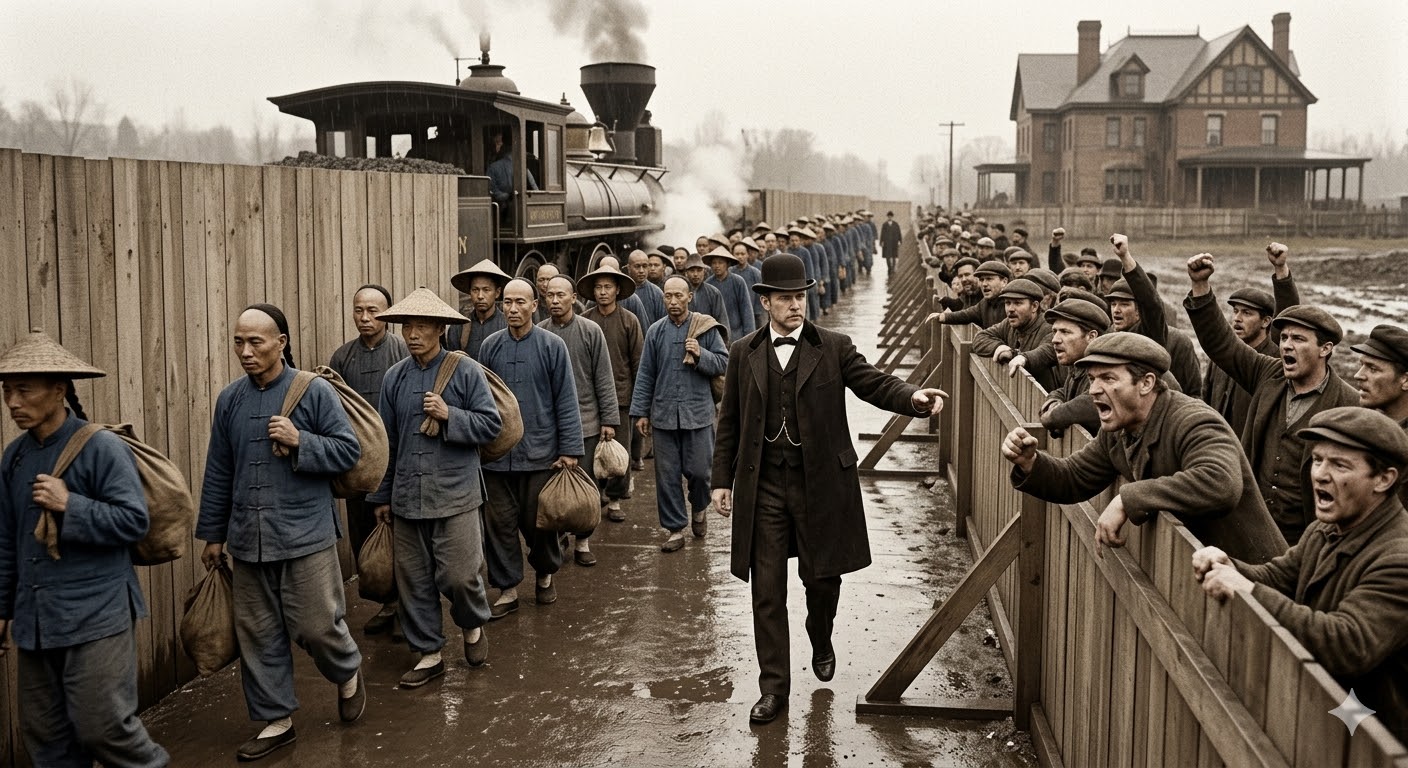
——记录匹兹堡华人的百年转型
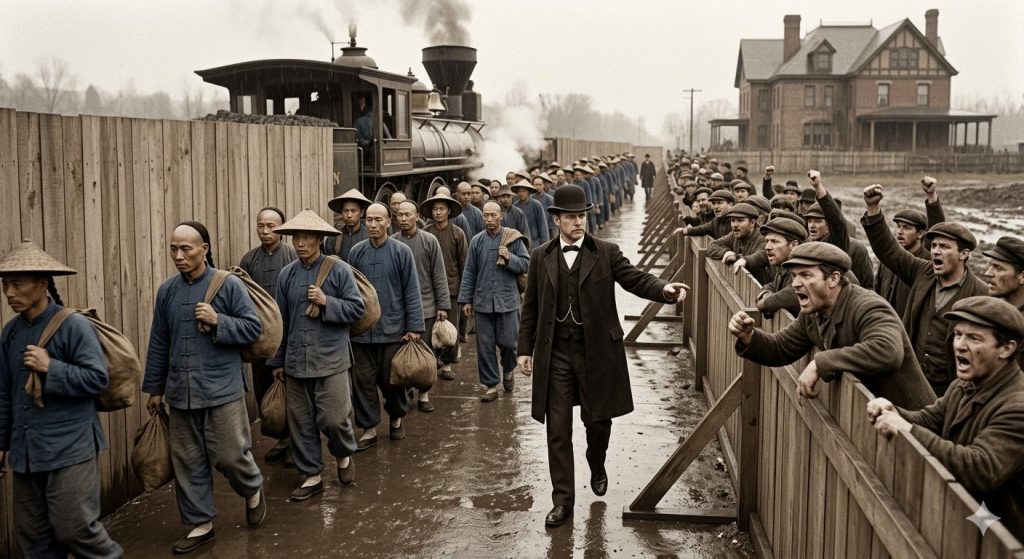
场景描述: 1872年初,一个细雨蒙蒙的早晨,在赫尔州海狸瀑布(Beaver Falls)火车站。站台被一堵高高的木围墙临时封闭,只有几名警卫和工厂负责人约翰·里夫斯在等候。一列火车列车车站,车门开启,约300名华工鱼贯而出。他们蓝色的斜襟布衫,脑后拖着长辫子,肩背粗布行囊。他们沉默地在里夫斯。的引导下,顺着围墙内的临时通道走向不远处的豪宅。站台外,一群被隔离的白人工人工人正愤怒地向围墙方向挥舞拳头和辱骂,眼神中充满了愤怒、惊讶和敌意。
1872年春天,在宾夕法尼亚州西部的工业小镇 海狸瀑布(Beaver Falls),一件不同寻常的事情正在发生。
这座小镇距离匹兹堡约三十英里,位于俄亥俄河流域的工业带上。当时的匹兹堡已经开始显露出“钢铁之城”的雏形,工厂、铁路和河运构成了当地经济最重要的支柱。
然而,在海狸瀑布的一家餐具制造厂里,一批新的 赴美华工 正在陆续抵达。
他们来自中国。跨越大陆的孤影:从加州金山到宾州钢城的华工征途(1849-1872)
一群陌生人的到来
1872年7月1日,第一批 赴美华工 抵达海狸瀑布火车站。
他们的外貌、语言和衣着与当地居民截然不同。对于这个宾夕法尼亚的小镇来说,这几乎是当地人第一次见到来自中国的劳工。
这些 赴美华工 大多来自中国南方的广东地区,其中许多人曾在美国西海岸参与修建 横贯大陆铁路。铁路完工之后,大量华工失去了原有的工作机会,于是开始在美国各地寻找新的生计。
海狸瀑布餐具公司(Beaver Falls Cutlery Company)正是在这样的背景下招募了他们。
当时,这家工厂正面临严重的劳资冲突。厂里的白人技术工人要求提高工资,而企业主则希望寻找新的劳动力来源,以降低生产成本。
于是,大约 200至300名华工 被陆续招募来到这里。
这项决定,在当时被一些人称为一次“劳动力实验”。
工厂与罢工
海狸瀑布餐具厂的技术核心来自英国工业城市 谢菲尔德(Sheffield)。
19世纪的谢菲尔德以刀具制造闻名世界,当地工匠拥有成熟的金属加工技术,也形成了较强的工会意识。这些工匠来到美国之后,在海狸瀑布餐具厂中承担着关键技术岗位。
到了1872年初,当工厂利润达到历史高点时,技术工人开始要求提高工资。
工厂管理层拒绝了这一要求。
双方的矛盾迅速升级,生产一度陷入停滞。为了打破罢工压力,工厂负责人 John Reeves 决定寻找新的劳动力来源。
他的目光投向了 赴美华工 。
从旧金山到宾夕法尼亚
1872年春天,John Reeves 前往旧金山。
当时的旧金山已经成为华人移民在美国最集中的城市之一。许多曾参与铁路建设的华工在铁路完工后失去了工作。
Reeves 在当地考察了 赴美华工 的工作表现,并认为他们正是海狸瀑布工厂需要的劳动力。
在旧金山期间,他通过一位华人劳务承包商 Ah Chuck 达成协议,组织华工前往宾夕法尼亚工作。
与此同时,另一部分华工则从 新奥尔良 和 辛辛那提 被招募来到海狸瀑布。
这是一场跨越整个北美大陆的劳动力迁移。
十一小时的工作日
华工进入工厂后,很快投入生产。
在海狸瀑布餐具厂,工人每天需要工作 约十一小时,每周六天。工厂车间充满机器轰鸣、炉火高温和飞溅的金属火花。
磨刀车间的工作尤其危险。工人必须长时间弯腰站在高速旋转的磨刀石前,将刀具反复打磨成锋利的刃口。
空气中弥漫着金属粉尘和油烟,而工人几乎没有任何防护设备。
他们的工资大约为 每天1美元,或每月约 25美元。
对于这些远道而来的 赴美华工 来说,这份工作既艰苦又危险,但仍然意味着在陌生国度继续生存下去的机会。
Mansion House:华工宿舍
为了方便管理,工厂为华工安排了一处集体宿舍—— Mansion House。
这是一座两层石砌建筑,周围建有围墙,与外部社区保持明显的隔离。宿舍内设有公共厨房、食堂和简单的寝室。
在这个几乎完全由男性组成的群体中,还有一位特别的人物。
她被称为 Madam Chow(周夫人)。
在当时的华工群体中,女性极为罕见。她的存在为这些远离家乡的工人带来了一丝家庭生活的气息。
紧张的社区关系
华工的到来很快引发了当地社会的紧张情绪。
一些白人工人把他们视为“破坏罢工者”,认为他们压低了工资、威胁了本地工人的生计。华工在街头经常遭遇辱骂和骚扰,甚至有人向他们投掷石块。
然而,在工厂车间内部,另一种关系也逐渐出现。
在长期的共同劳动中,一些白人工人开始意识到,华工同样承受着漫长的工作时间和危险的工作环境。
这种共同的劳动经历,在一定程度上缓和了最初的敌意。
一场短暂却重要的实验
海狸瀑布的华工实验并没有持续太久。
1873年,美国爆发严重的经济危机(Panic of 1873)。工业需求下降,许多企业被迫缩减生产规模。海狸瀑布餐具厂也受到严重冲击。
随着工厂订单减少,大批华工陆续离开。
到1870年代中期,这场曾经引起广泛关注的“华工实验”逐渐结束。
然而,这段历史却留下了一个重要的结果。
一些离开海狸瀑布的华工并没有返回西海岸,而是继续向南移动,来到不远处的 匹兹堡。
在那里,他们开始新的生活。
下一篇预告
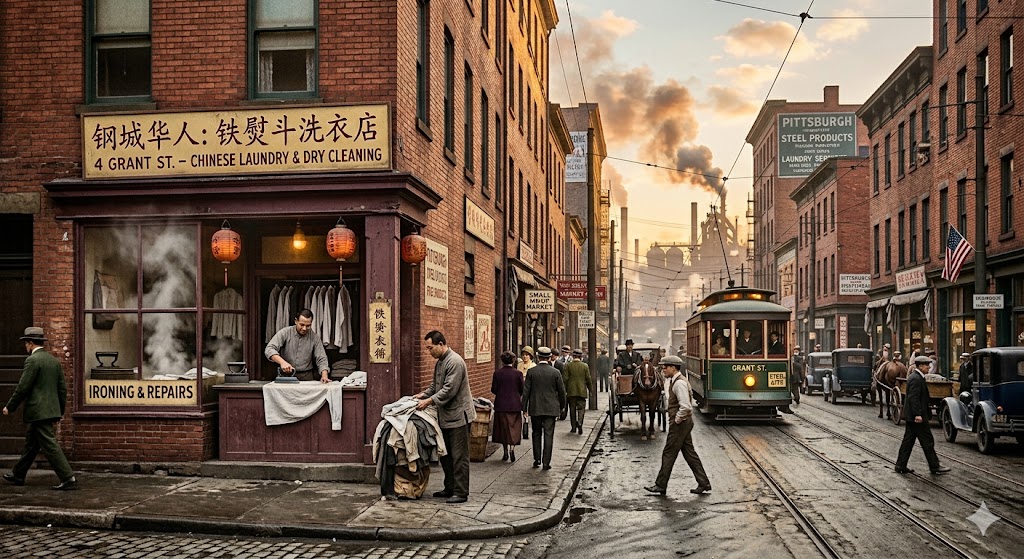
离开海狸瀑布之后,一些华工来到匹兹堡。在这座正在迅速发展的工业城市里,他们逐渐转向经营洗衣店、小餐馆和杂货铺。
一个新的华人社区开始形成。
下一篇:
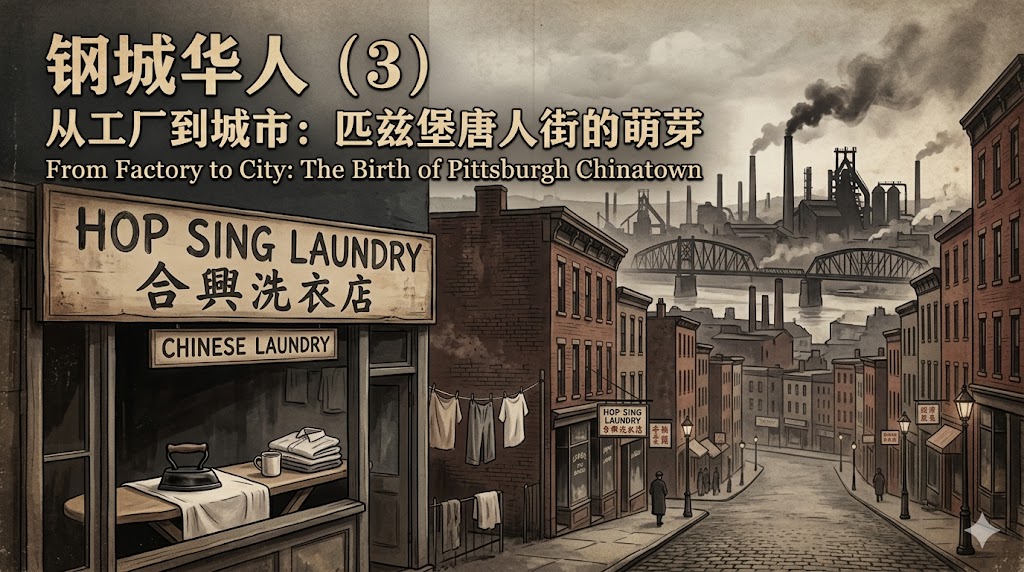
钢城华人(3)|从工厂到城市:匹兹堡唐人街的萌芽
Steel City Chinese (2)
The Industrial Experiment at Beaver Falls, 1872
Scene Description
In early 1872, on a misty morning at the Beaver Falls train station in Pennsylvania, the platform was temporarily enclosed by a tall wooden barrier. Only a few guards and the factory manager, John Reeves, stood waiting.
As the train arrived and its doors opened, around 300 Chinese laborers stepped out one by one. They wore blue traditional jackets with cloth bundles on their shoulders, long queues trailing behind their heads. Silent and orderly, they followed Reeves along a narrow passage inside the enclosure toward a large building nearby.
Outside the barrier, a group of white workers—kept at a distance—shouted angrily, waving their fists. Their faces reflected a mixture of anger, shock, and hostility.
A Group of Strangers Arrives
In the spring of 1872, something unusual was unfolding in the industrial town of Beaver Falls, about thirty miles northwest of Pittsburgh, along the Ohio River.
At the time, Pittsburgh was beginning to emerge as the “Steel City,” with factories, railroads, and river transport forming the backbone of the regional economy.
At a cutlery manufacturing plant in Beaver Falls, however, a new group of workers was arriving.
They came from China.
On July 1, 1872, the first group of Chinese laborers reached the Beaver Falls station. Their appearance, language, and clothing were entirely unfamiliar to local residents—many of whom had never seen Chinese workers before.
Most of these laborers came from Guangdong Province in southern China. Many had previously worked on the construction of the Transcontinental Railroad. After its completion, large numbers of Chinese workers were left without employment and began searching for new opportunities across the United States.
The Beaver Falls Cutlery Company recruited them under these circumstances.
At the time, the factory was facing serious labor disputes. White skilled workers were demanding higher wages, while the company sought alternative labor sources to reduce costs.
Between 200 and 300 Chinese workers were brought in.
This decision was, by some, described as a “labor experiment.”
The Factory and the Strike
The technical foundation of the Beaver Falls Cutlery Company came from Sheffield, England—then the world’s leading center of knife and steel production.
Sheffield craftsmen brought advanced metalworking skills to the factory, along with a strong tradition of labor organization.
By early 1872, as profits reached a peak, skilled workers began demanding higher wages. Management refused.
The conflict escalated quickly, and production slowed. To break the strike, factory manager John Reeves turned to a new labor source: Chinese workers.
From San Francisco to Pennsylvania
In the spring of 1872, John Reeves traveled to San Francisco, which had already become the largest center of Chinese immigrants in the United States.
There, he observed the work performance of Chinese laborers—many of whom had recently lost their jobs after the railroad’s completion—and concluded they were suitable for his factory.
During his visit, Reeves reached an agreement with a Chinese labor contractor named Ah Chuck to recruit workers for Pennsylvania.
Additional laborers were brought in from New Orleans and Cincinnati.
This marked a large-scale labor migration across the North American continent.
An Eleven-Hour Workday
Once in the factory, the Chinese workers quickly entered production.
They worked approximately eleven hours a day, six days a week.
The workshop was filled with the roar of machinery, intense heat from furnaces, and flying metal sparks.
Grinding rooms were especially dangerous. Workers stood bent over rapidly spinning grindstones, sharpening blades for long hours.
The air was thick with metal dust and smoke, and protective equipment was virtually nonexistent.
Wages were about one dollar per day, or roughly twenty-five dollars per month.
For these laborers, the work was harsh and dangerous, yet it represented a chance to survive in a foreign land.
Mansion House: The Workers’ Quarters
To manage the workers, the factory arranged collective housing known as the Mansion House.
This two-story stone building was surrounded by walls, clearly separated from the surrounding community. Inside were shared kitchens, dining spaces, and simple sleeping quarters.
Among this almost entirely male population was one notable figure:
A woman known as Madam Chow.
Women were extremely rare in Chinese labor communities at the time. Her presence brought a small sense of domestic life to workers far from home.
Tensions in the Community
The arrival of Chinese workers quickly heightened tensions in the local community.
Some white workers viewed them as strikebreakers—believing they lowered wages and threatened local employment.
Chinese workers often faced verbal abuse, harassment, and even stone-throwing.
Yet inside the factory, a more complex relationship gradually developed.
Through long hours of shared labor, some white workers began to recognize that Chinese workers endured the same harsh conditions.
This shared experience softened some of the initial hostility.
A Brief but Significant Experiment
The Beaver Falls labor experiment did not last long.
In 1873, the United States entered a severe economic depression—the Panic of 1873.
Industrial demand declined, and many factories were forced to reduce operations. The Beaver Falls Cutlery Company was heavily affected.
As orders decreased, large numbers of Chinese workers began to leave.
By the mid-1870s, this widely discussed “experiment” came to an end.
Yet it left behind an important legacy.
Some of the Chinese workers who left Beaver Falls did not return to the West Coast. Instead, they moved south to nearby Pittsburgh.
There, they began new lives.
Preview of the Next Chapter
After leaving Beaver Falls, some Chinese workers settled in Pittsburgh.
In this rapidly growing industrial city, they gradually shifted into operating laundries, small restaurants, and grocery shops.
A new Chinese community began to take shape.
Next:
Steel City Chinese (3) | From Factory to City: The Emergence of Pittsburgh’s Chinatown



格兰特街的铁熨斗)
|从工厂到城市:匹兹堡唐人街的萌芽)