
 tvowmedia
—A Chronicle of the Century-Long Transformation of the Chinese Community in Pittsburgh
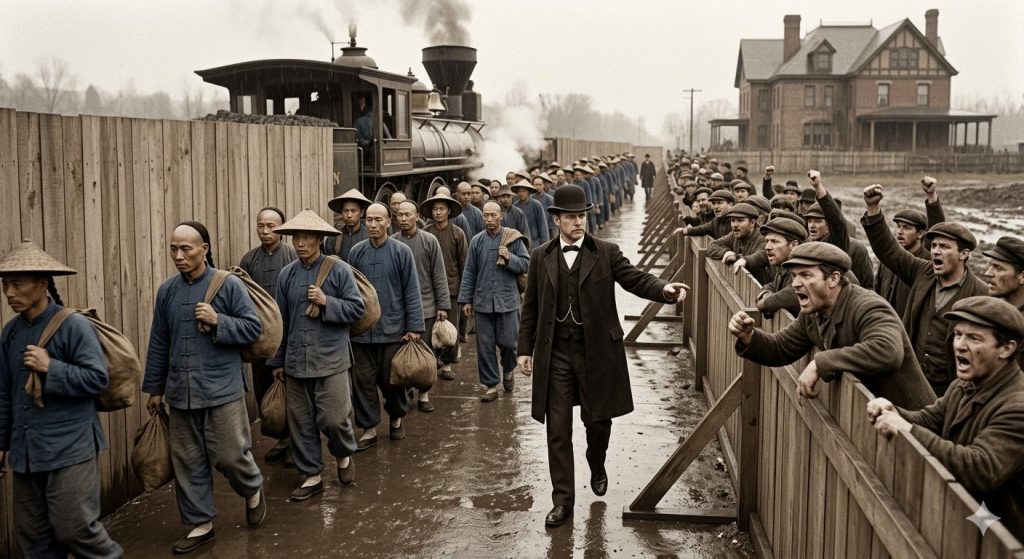
Scene description: On a drizzly morning in early 1872, at the Beaver Falls train station in Hull, the platform was temporarily closed off by a high wooden wall. Only a few guards and factory manager John Reeves were waiting. A train pulled up, its doors opening, and about 300 Chinese laborers filed out. They wore blue blouses with long braids trailing behind their heads, and carried coarse cloth bags on their shoulders. Silently, led by Reeves, they followed the temporary passageway inside the wall towards the nearby mansion. Outside the platform, a group of segregated white workers angrily waved their fists and hurled insults at the wall, their eyes filled with anger, surprise, and hostility.
In the spring of 1872, in an industrial town in western Pennsylvania Beaver FallsSomething unusual is happening.
This small town is about 30 miles from Pittsburgh, located on the industrial belt of the Ohio River. At that time, Pittsburgh was beginning to show the beginnings of becoming a "steel city," with factories, railroads, and river transport forming the most important pillars of the local economy.
然而,在海狸瀑布的一家餐具制造厂里,一批新的 赴美华工 正在陆续抵达。
They are from China.A Lone Shadow Across Continents: The Journey of Chinese Laborers from San Francisco, California to Steel City, Pennsylvania (1849-1872)
The arrival of a group of strangers
1872年7月1日,第一批 赴美华工 抵达海狸瀑布火车站。
Their appearance, language, and clothing were strikingly different from the local residents. For this small Pennsylvania town, this was almost the first time the locals had ever seen laborers from China.
这些 赴美华工 大多来自中国南方的广东地区,其中许多人曾在美国西海岸参与修建 Transcontinental RailwayAfter the railroad was completed, many Chinese laborers lost their original jobs and began to look for new livelihoods throughout the United States.
It was against this backdrop that Beaver Falls Cutlery Company recruited them.
At the time, the factory was facing a serious labor dispute. The white skilled workers were demanding higher wages, while the business owner wanted to find new sources of labor to reduce production costs.
Therefore, approximately 200 to 300 Chinese laborers They were recruited here one after another.
This decision was described by some at the time as a "labor experiment".
Factories and strikes
Beaver Falls tableware factory's core technology comes from an industrial city in England. Sheffield。
Sheffield in the 19th century was world-renowned for its knife manufacturing. Local artisans possessed sophisticated metalworking techniques and a strong sense of unionism. After arriving in the United States, these artisans held key technical positions at the Beaver Falls cutlery factory.
By early 1872, when factory profits reached an all-time high, skilled workers began demanding higher wages.
The factory management rejected the request.
The conflict between the two sides escalated rapidly, and production came to a standstill. In an effort to break the strike, the factory manager... John Reeves The decision was made to find new sources of labor.
他的目光投向了 赴美华工 。
From San Francisco to Pennsylvania
In the spring of 1872, John Reeves traveled to San Francisco.
At that time, San Francisco had become one of the cities with the highest concentration of Chinese immigrants in the United States. Many Chinese laborers who had participated in the construction of the railroad lost their jobs after the railroad was completed.
Reeves 在当地考察了 赴美华工 的工作表现,并认为他们正是海狸瀑布工厂需要的劳动力。
During his time in San Francisco, he worked through a Chinese labor contractor. Ah Chuck An agreement was reached to organize Chinese laborers to work in Pennsylvania.
Meanwhile, another group of Chinese laborers... New Orleans 和 Cincinnati They were recruited to Beaver Falls.
This was a migration of labor across the entire North American continent.
11-hour workday
After the Chinese workers entered the factory, they quickly began production.
At the Beaver Falls tableware factory, workers need to work every day. Approximately eleven hoursSix days a week. The factory workshop is filled with the roar of machines, the high temperature of furnaces, and flying metal sparks.
Working in a knife-sharpening workshop is particularly dangerous. Workers must stand bent over for long periods in front of high-speed rotating whetstones, repeatedly sharpening knives to a sharp edge.
The air was filled with metallic dust and fumes, and the workers had almost no protective equipment.
Their wages are approximately $1 per dayor about once a month $25。
对于这些远道而来的 赴美华工 来说,这份工作既艰苦又危险,但仍然意味着在陌生国度继续生存下去的机会。
Mansion House: Dormitory of Chinese University of Science and Technology
To facilitate management, the factory arranged a dormitory for the Chinese workers. Mansion House。
This is a two-story stone building surrounded by a wall, maintaining a clear separation from the outside community. The dormitory includes a communal kitchen, a dining hall, and simple bedrooms.
In this almost entirely male group, there is one particularly noteworthy individual.
She is known as Madam Chow。
Women were extremely rare among the Chinese laborers at the time. Her presence brought a touch of family life to these workers who were far from home.
Tense community relations
The arrival of Chinese laborers quickly triggered tensions in the local community.
Some white workers viewed them as "strike-breakers," believing they were driving down wages and threatening the livelihoods of local workers. Chinese laborers frequently faced verbal abuse and harassment on the streets, and some even had stones thrown at them.
However, inside the factory workshop, another kind of relationship gradually emerged.
Through long periods of shared labor, some white workers began to realize that Chinese laborers also endured long working hours and dangerous working conditions.
This shared work experience eased the initial hostility to some extent.
A brief but important experiment
The experiment by Chinese laborers at Beaver Falls did not last long.
In 1873, the United States experienced a severe economic crisis (Panic of 1873). Industrial demand declined, forcing many businesses to scale back production. The Beaver Falls tableware factory was also severely impacted.
As factory orders decreased, a large number of Chinese laborers left the factory.
By the mid-1870s, this once widely publicized "Chinese Labor Experiment" had gradually come to an end.
However, this history left behind an important outcome.
Some of the Chinese laborers who left Beaver Falls did not return to the west coast, but continued south, arriving at a nearby... Pittsburgh。
There, they began a new life.
Next episode preview
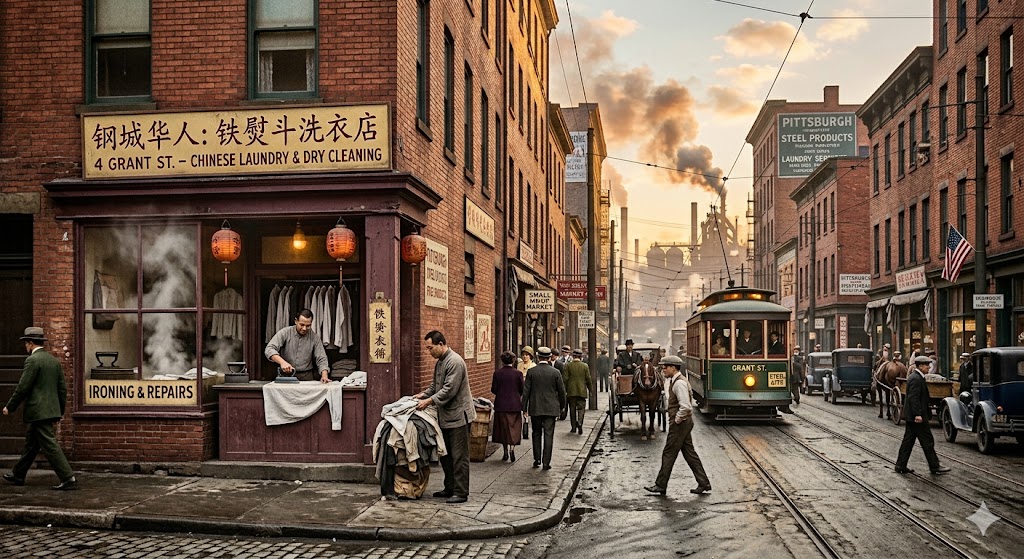
After leaving Beaver Falls, some Chinese laborers came to Pittsburgh. In this rapidly developing industrial city, they gradually turned to running laundries, small restaurants, and grocery stores.
A new Chinese community began to take shape.
Next article:
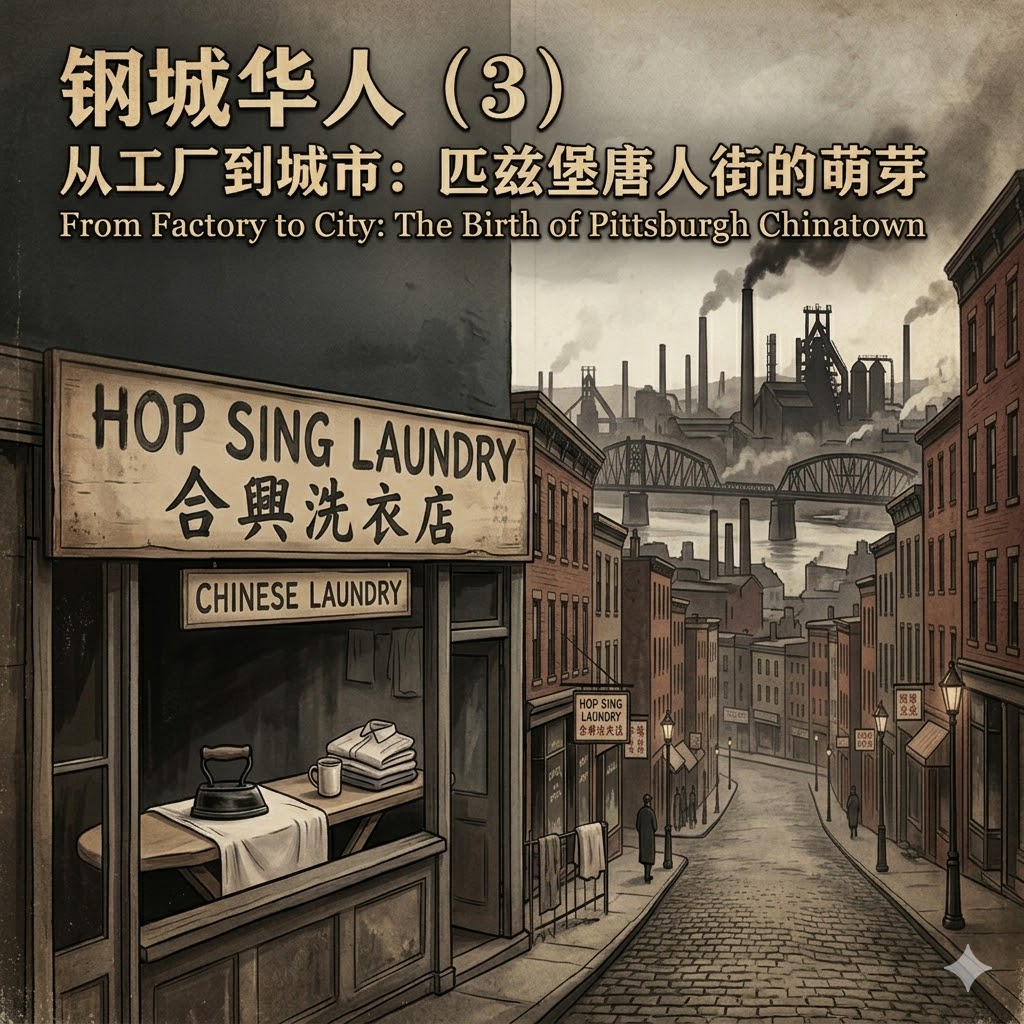
Chinese in Steel City (3) | From Factory to City: The Budding of Pittsburgh's Chinatown
Steel City Chinese (2)
The Industrial Experiment at Beaver Falls, 1872
Scene Description
In early 1872, on a misty morning at the Beaver Falls train station in Pennsylvania, the platform was temporarily enclosed by a tall wooden barrier. Only a few guards and the factory manager, John Reeves, stood waiting.
As the train arrived and its doors opened, around 300 Chinese laborers stepped out one by one. They wore blue traditional jackets with cloth bundles on their shoulders, long queues trailing behind their heads. Silent and orderly, they followed Reeves along a narrow passage inside the enclosure toward a large building nearby.
Outside the barrier, a group of white workers—kept at a distance—shouted angrily, waving their fists. Their faces reflected a mixture of anger, shock, and hostility.
A Group of Strangers Arrives
In the spring of 1872, something unusual was unfolding in the industrial town of Beaver Falls, about thirty miles northwest of Pittsburgh, along the Ohio River.
At the time, Pittsburgh was beginning to emerge as the “Steel City,” with factories, railroads, and river transport forming the backbone of the regional economy.
At a cutlery manufacturing plant in Beaver Falls, however, a new group of workers was arriving.
They came from China.
On July 1, 1872, the first group of Chinese laborers reached the Beaver Falls station. Their appearance, language, and clothing were entirely unfamiliar to local residents—many of whom had never seen Chinese workers before.
Most of these laborers came from Guangdong Province in southern China. Many had previously worked on the construction of the Transcontinental Railroad. After its completion, large numbers of Chinese workers were left without employment and began searching for new opportunities across the United States.
The Beaver Falls Cutlery Company recruited them under these circumstances.
At the time, the factory was facing serious labor disputes. White skilled workers were demanding higher wages, while the company sought alternative labor sources to reduce costs.
Between 200 and 300 Chinese workers were brought in.
This decision was, by some, described as a “labor experiment.”
The Factory and the Strike
The technical foundation of the Beaver Falls Cutlery Company came from Sheffield, England—then the world's leading center of knife and steel production.
Sheffield craftsmen brought advanced metalworking skills to the factory, along with a strong tradition of labor organization.
By early 1872, as profits reached a peak, skilled workers began demanding higher wages. Management refused.
The conflict escalated quickly, and production slowed. To break the strike, factory manager John Reeves turned to a new labor source: Chinese workers.
From San Francisco to Pennsylvania
In the spring of 1872, John Reeves traveled to San Francisco, which had already become the largest center of Chinese immigrants in the United States.
There, he observed the work performance of Chinese laborers—many of whom had recently lost their jobs after the railroad's completion—and concluded they were suitable for his factory.
During his visit, Reeves reached an agreement with a Chinese labor contractor named Ah Chuck to recruit workers for Pennsylvania.
Additional laborers were brought in from New Orleans and Cincinnati.
This marked a large-scale labor migration across the North American continent.
An Eleven-Hour Workday
Once in the factory, the Chinese workers quickly entered production.
They worked approximately eleven hours a day, six days a week.
The workshop was filled with the roar of machinery, intense heat from furnaces, and flying metal sparks.
Grinding rooms were especially dangerous. Workers stood bent over rapidly spinning grindstones, sharpening blades for long hours.
The air was thick with metal dust and smoke, and protective equipment was virtually nonexistent.
Wages were about one dollar per day, or roughly twenty-five dollars per month.
For these laborers, the work was harsh and dangerous, yet it represented a chance to survive in a foreign land.
Mansion House: The Workers' Quarters
To manage the workers, the factory arranged collective housing known as the Mansion House.
This two-story stone building was surrounded by walls, clearly separated from the surrounding community. Inside were shared kitchens, dining spaces, and simple sleeping quarters.
Among this almost entirely male population was one notable figure:
A woman known as Madam Chow.
Women were extremely rare in Chinese labor communities at the time. Her presence brought a small sense of domestic life to workers far from home.
Tensions in the Community
The arrival of Chinese workers quickly heightened tensions in the local community.
Some white workers viewed them as strikebreakers—believing them lowered wages and threatened local employment.
Chinese workers often face verbal abuse, harassment, and even stone-throwing.
Yet inside the factory, a more complex relationship gradually developed.
Through long hours of shared labor, some white workers began to recognize that Chinese workers endured the same harsh conditions.
This shared experience softened some of the initial hostility.
A Brief but Significant Experiment
The Beaver Falls labor experiment did not last long.
In 1873, the United States entered a severe economic depression—the Panic of 1873.
Industrial demand declined, and many factories were forced to reduce operations. The Beaver Falls Cutlery Company was heavily affected.
As orders decreased, large numbers of Chinese workers began to leave.
By the mid-1870s, this widely discussed “experiment” came to an end.
Yet it left behind an important legacy.
Some of the Chinese workers who left Beaver Falls did not return to the West Coast. Instead, they moved south to nearby Pittsburgh.
There, they began new lives.
Preview of the Next Chapter
After leaving Beaver Falls, some Chinese workers settled in Pittsburgh.
In this rapidly growing industrial city, they gradually shifted into operating laundries, small restaurants, and grocery shops.
A new Chinese community began to take shape.
Next:
Steel City Chinese (3) | From Factory to City: The Emergence of Pittsburgh's Chinatown



格兰特街的铁熨斗)
|从工厂到城市:匹兹堡唐人街的萌芽)