
 tvowmedia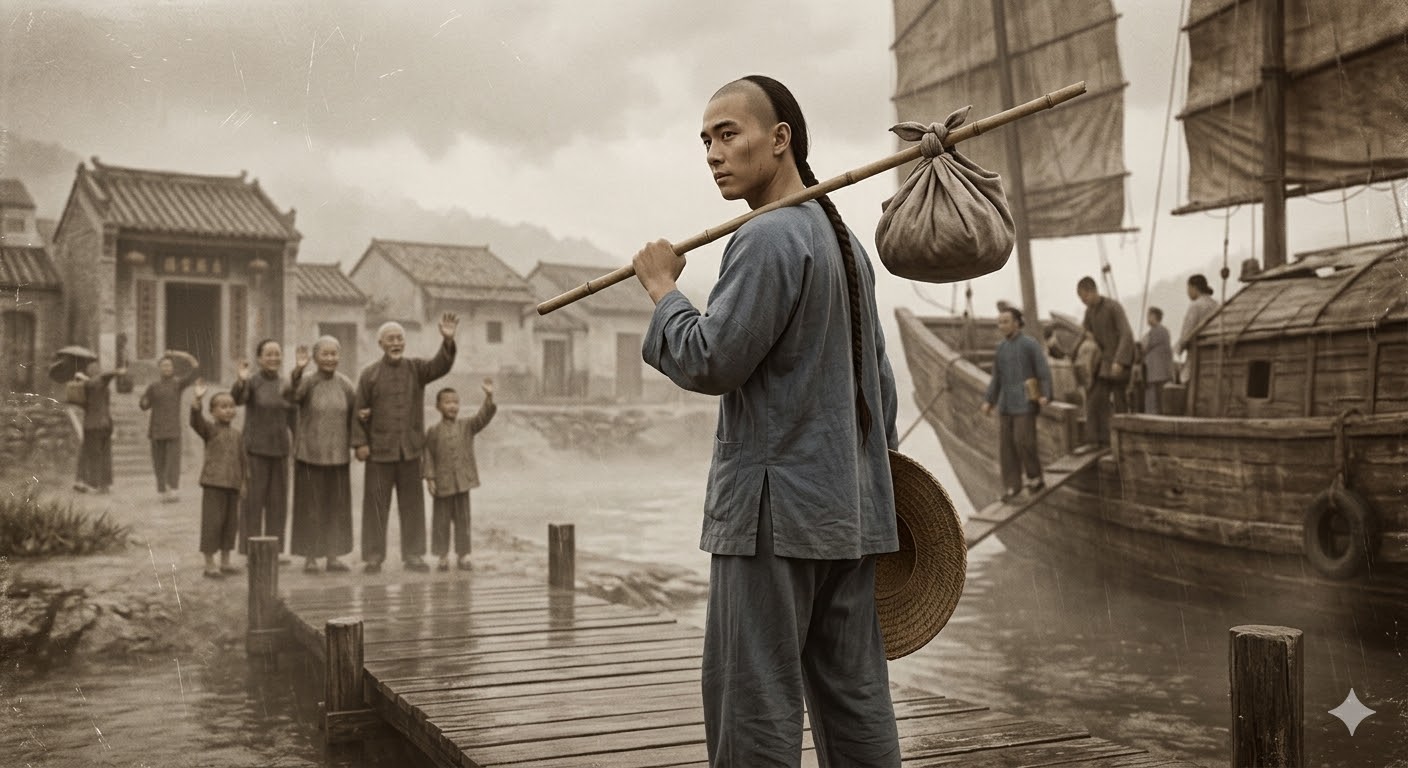
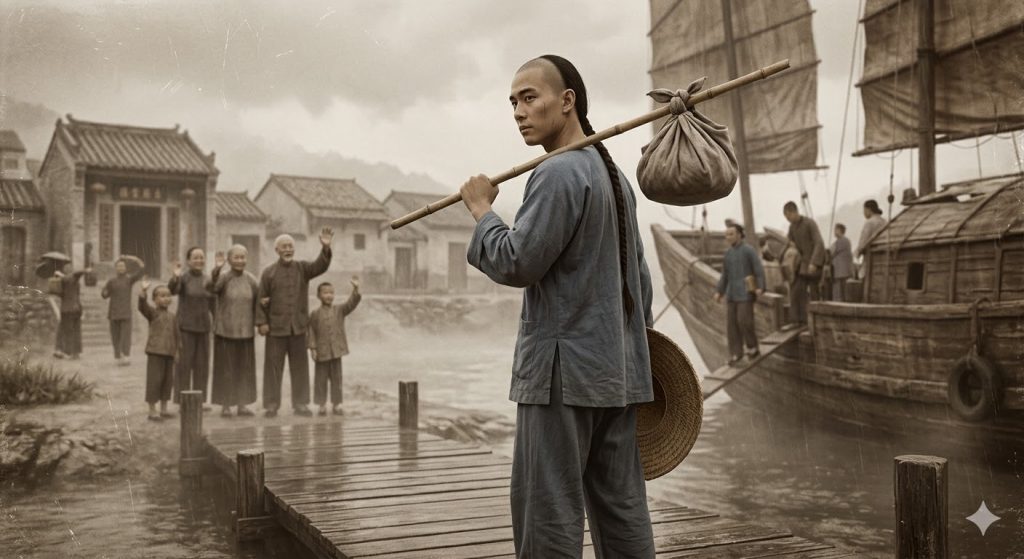
【告别】——1850年代的广东码头
场景描述:一个烟雨蒙蒙的清晨,珠江三角洲一个简陋的稀疏的码头。年轻的中国农民(约20岁),留着长辫子,身穿蓝色斜襟布衫,肩背粗布行李行囊。他正准备着前往旧金山的躯干“大眼船”。他回望了一下村庄并挥手告别的家人,眼神坚毅中带着一丝忧伤。
钢城华人(1)
太平洋的彼岸:从未谋面的“金山”
In 1848, a cry of alarm from the Sacramento River Valley in California reached Taishan and Kaiping in Guangdong, thousands of miles away.
那是一个社会动荡、人生计维艰的时代。成千上万的中国青年,怀揣着“让家人吃上饱饭”的朴素愿望,告别了珠江三角洲的烟火,踏上了被称为“大眼船”的木船。他们被赋予了一个充满希望的称号——“金山客”。
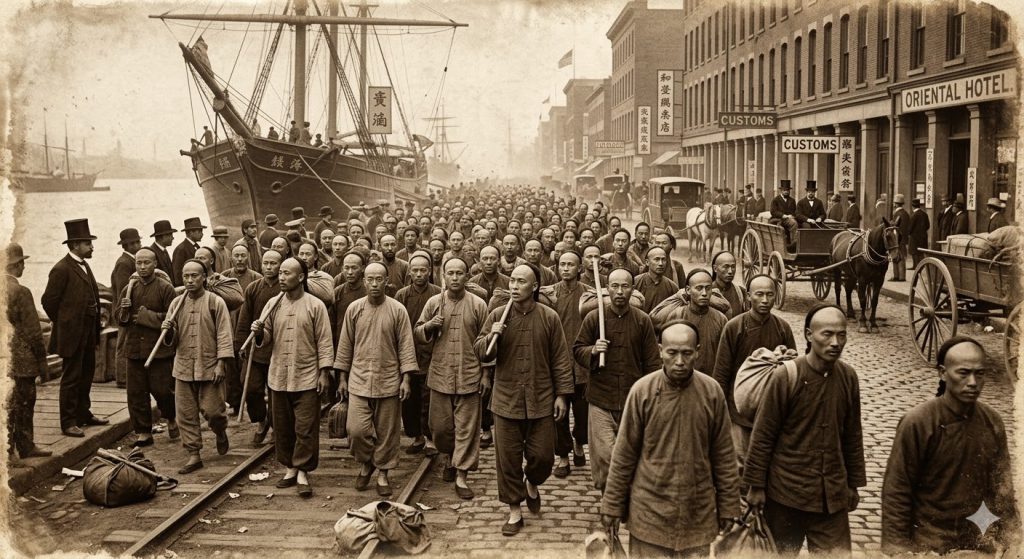
然而,太平洋的浪潮并没有给予他们温柔的欢迎。经历了数月的漂泊与疾病的考验,当他们终于踏上旧金山的码头时,迎接他们的不是遍地黄金,而是艰辛劳动的开始。在加州的矿区, 华工 们用最简陋的工具,在白人放弃的矿渣中细细筛分,那是华人移民史在北美的第一道拓荒印记。
脊梁与钢轨:横贯大陆的壮举
到了19世纪60年代,美国的雄心不再仅仅满足于开采黄金,而是要用钢铁巨龙连接大西洋与太平洋。
中部太平洋铁路(Central Pacific Railroad)的建设,是一场与自然的博弈。内华达山脉的悬崖峭壁、深不见底的峡谷,以及常年不化的积雪,让许多白人工人望而却步。就在此时,成千上万的 华工 走上施工一线。
他们腰系绳索,悬挂在半山腰凿开坚硬的花岗岩;他们在严寒中铺设枕木,在烈日下挥动铁锤。1869年,当蒸汽机车在犹他州的普罗蒙特里角(Promontory Summit)胜利会师时,欢呼声响彻云霄,但在这份功勋簿的背后,是无数华工埋骨他乡的无名坟墓。
被迫的迁徙:从日落之城向东出发
铁路的终结,并没有为 华工 换来应有的尊重。恰恰相反,随着19世纪60年代末美国经济的波动,一股排华的暗流开始在西海岸涌动。
“他们抢走了我们的饭碗。”
这种狭隘的情绪迅速演变为街头的暴力和限制性的法令。华人商铺被毁坏,工棚遭到袭击。西海岸,这个他们最初梦想开始的地方,正变得愈发冷酷。
为了寻找一线生机,一部分华工没有选择回乡,而是选择继续前行——这一次,他们不再横渡太平洋,而是沿着自己亲手铺设的铁轨,向东迁徙。
1872年:海狸瀑布的第一个脚印
1872年,对于宾夕法尼亚州的华人历史来说,是一个值得铭记的坐标。
当年约300名 华工 ,受雇于宾州西部海狸瀑布(Beaver Falls)的一家餐具厂。他们翻越内华达山脉,穿越广袤的中西部平原,最终踏上了宾夕法尼亚州的土地。这是华人成规模进入宾州的最早记录之一。
他们的到来虽然伴随着当地劳资矛盾的复杂背景,但这些坚韧的灵魂在宾州的工厂里证明了自己的价值。几年后,随着工业浪潮的变化,其中一部分先行者继续南下,来到了一个钢铁帝国崛起前夜的城市——匹兹堡。
至此,在宾州这片土地上,一个属于华人的百年故事,正式拉开了序幕……
下一篇预告:
钢城华人(2)|1872年的海狸瀑布工业实验
1872年,一批华工抵达宾夕法尼亚州的海狸瀑布。他们原本只是被当作替代劳动力引入的一群陌生工人,却在无意之间开启了匹兹堡华人历史的第一页。
Documenting the century-long transformation of the Chinese community in Pittsburgh
Chinese in the Steel City (1)
Across the Pacific: The Unseen “Gold Mountain”
In 1848, a cry of discovery in California’s Sacramento Valley echoed all the way across the Pacific Ocean to the villages of Taishan and Kaiping in Guangdong, China.
It was a time of social upheaval and economic hardship. Thousands of young men left the Pearl River Delta with a simple dream—to earn enough money so their families could eat well. They boarded wooden ships known as the “big-eye boats,” embarking on a long and uncertain voyage. These migrants would come to be known by a hopeful name: “Gold Mountain Sojourners.”
Yet the waves of the Pacific offered them little comfort. After months of travel, illness, and uncertainty, they finally arrived at the docks of San Francisco. What awaited them was not a land paved with gold, but the beginning of a life defined by hardship.
In the goldfields of California, Chinese miners worked with the most basic tools, carefully sifting through the discarded gravel that others had abandoned. Their patient labor left one of the earliest marks of Chinese migration in North America.
Backbone and Steel: Building the Transcontinental Railroad
By the 1860s, the ambitions of the United States had grown far beyond the search for gold. The nation now sought to connect the Atlantic and Pacific Oceans with a ribbon of steel.
The construction of the Central Pacific Railroad was a battle against nature itself. Workers faced the towering granite cliffs of the Sierra Nevada, deep ravines, and heavy snow that blanketed the mountains year after year. Many white laborers abandoned the project under such brutal conditions.
It was then that tens of thousands of Chinese workers stepped forward.
They tied ropes around their waists and hung from mountain cliffs to carve tunnels through solid rock. In freezing winters they laid railroad ties in the snow, and in scorching summers they swung their hammers beneath the blazing sun. When the two railroads finally met at Promontory Summit, Utah, in 1869, celebrations echoed across the country.
Yet behind this monumental achievement lay the silent sacrifices of countless Chinese laborers, many of whom never returned home.
A Forced Migration: From the Sunset Coast to the East
The completion of the railroad did not bring respect or security to Chinese workers. Instead, the late 1860s saw a growing wave of anti-Chinese sentiment on the West Coast.
“They are taking our jobs.”
Such accusations spread quickly and soon turned into violence and discriminatory laws. Chinese shops were vandalized, and labor camps were attacked. The West Coast—the place where many Chinese immigrants had first dreamed of opportunity—was becoming increasingly hostile.
Faced with these dangers, some Chinese workers made a difficult choice. Rather than returning to China, they continued their journey.
This time, they did not cross the Pacific.
Instead, they followed the very railroads they had helped build, moving eastward across the American continent in search of new opportunities.
1872: The First Footprint in Beaver Falls
The year 1872 marked a turning point in the Chinese history of Pennsylvania.
Around three hundred Chinese workers were recruited to work at the Beaver Falls Cutlery Company in western Pennsylvania. Traveling across the Sierra Nevada and the vast plains of the Midwest, they eventually reached the industrial lands of Pennsylvania.
Their arrival represented one of the earliest recorded movements of Chinese laborers into the region.
Although their presence was closely tied to local labor conflicts, these resilient workers soon proved their value in the factories of Pennsylvania.
A few years later, as the tides of industry shifted, some of these pioneers moved further south. Their journey brought them to a city that was rapidly rising as a center of American industry—Pittsburgh.
And there, on the soil of Pennsylvania, the first chapter of a century-long Chinese story had quietly begun.
Preview of the Next Chapter
In 1872, a group of Chinese laborers arrived in Beaver Falls, Pennsylvania.
Originally brought in as replacement workers during a labor dispute, these unfamiliar newcomers would unintentionally open the first chapter of Chinese history in Pittsburgh.
Next Article:
Chinese in the Steel City (2) | The Beaver Falls Industrial Experiment of 1872
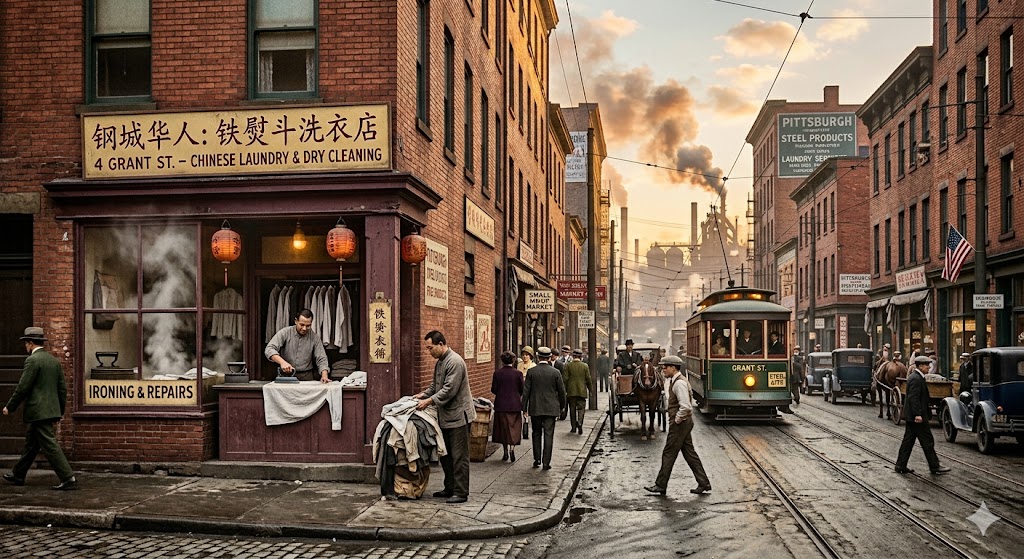


格兰特街的铁熨斗)
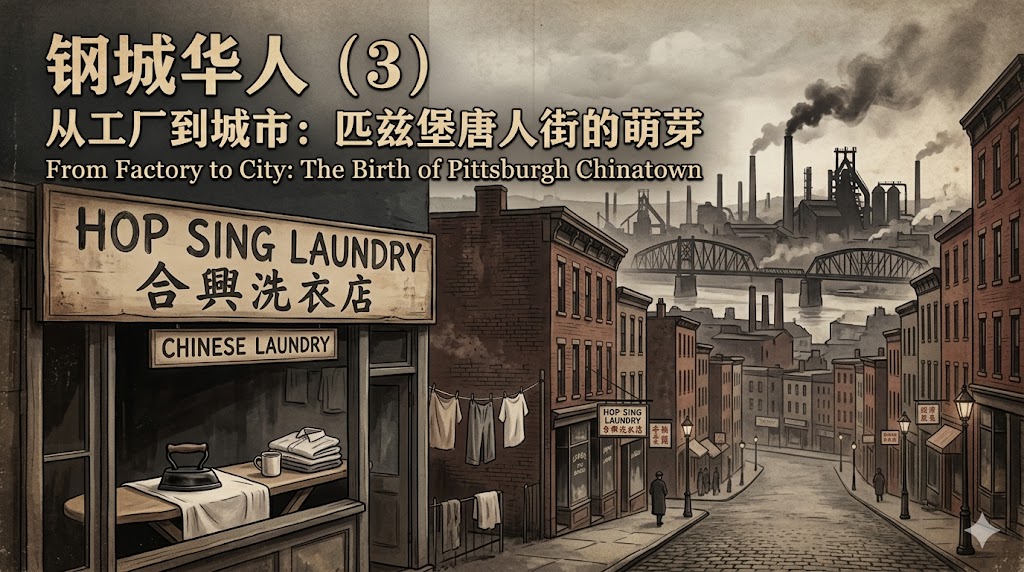
|从工厂到城市:匹兹堡唐人街的萌芽)